Specimen · N°039 · Rain · ▶ Film
Pluviocount lateriticaThrice-count Flower
One rain alone will never wake it.
FOUND 17.5°N 73.7°E · Seasonal laterite plateaus of the northern Western Ghats, India · ✝ EX · Last seen 2013
One rain alone will never wake it.
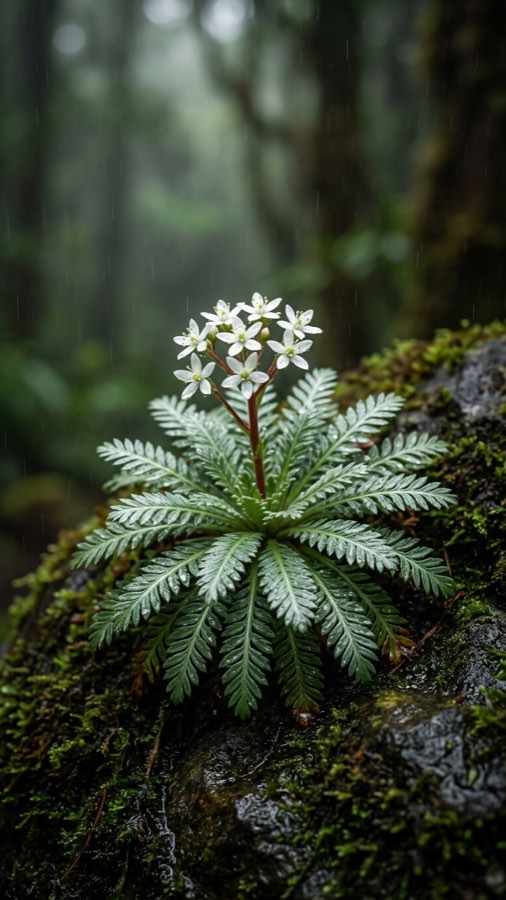
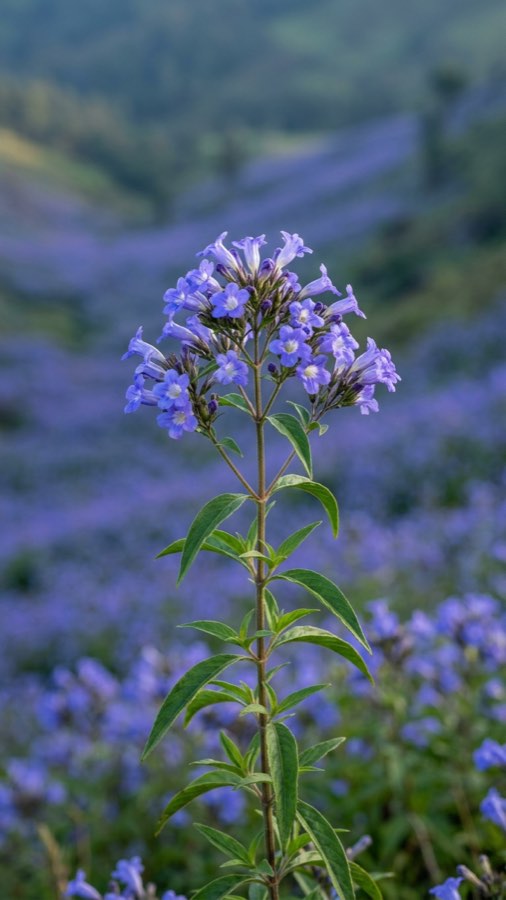
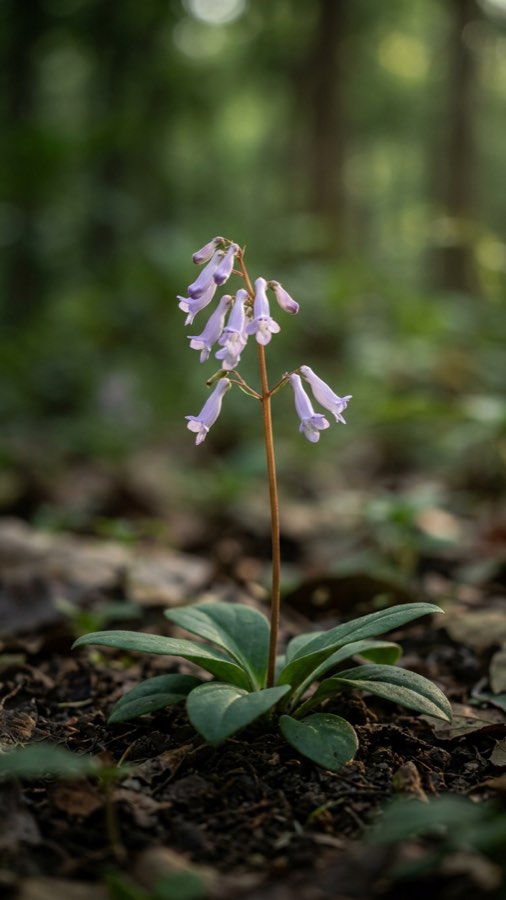
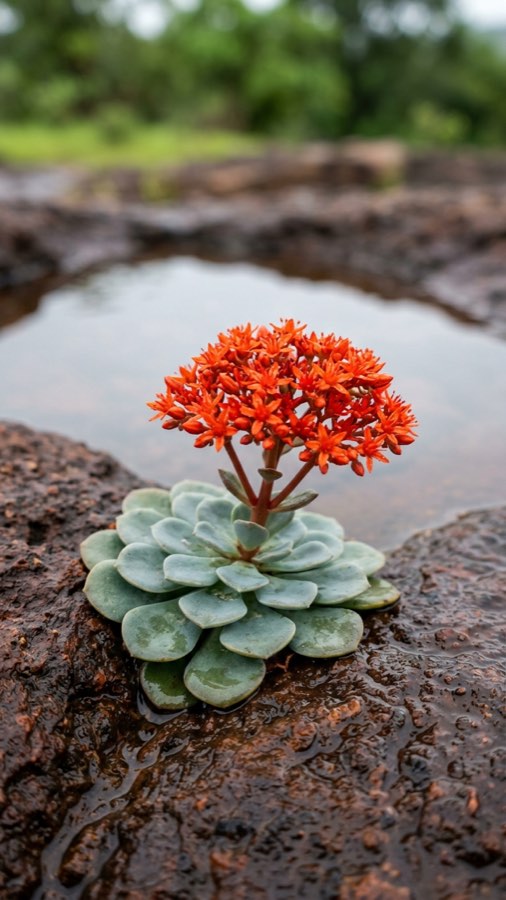
The Thrice-count Flower is a small rock-dwelling plant some 10 cm tall. It presses a flat rosette of round, fleshy grey-green leaves against the red laterite, and on short red-brown stems bears dense heads of small vivid scarlet star-shaped flowers. It roots in the bare floor of shallow rock-basins after the rainwater has drained, and its dormant seeds seem to count the times the ground is wetted and dried. One or two brief rains never wake them; only after the third drying does the whole basin bloom at once. It appears to hold a rule of counting, so as not to mistake a passing shower for the true monsoon.
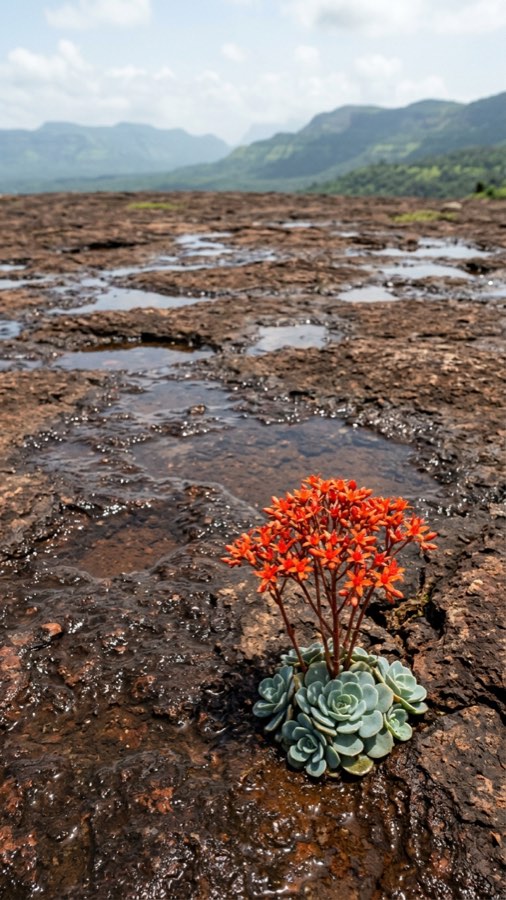 PLATE I
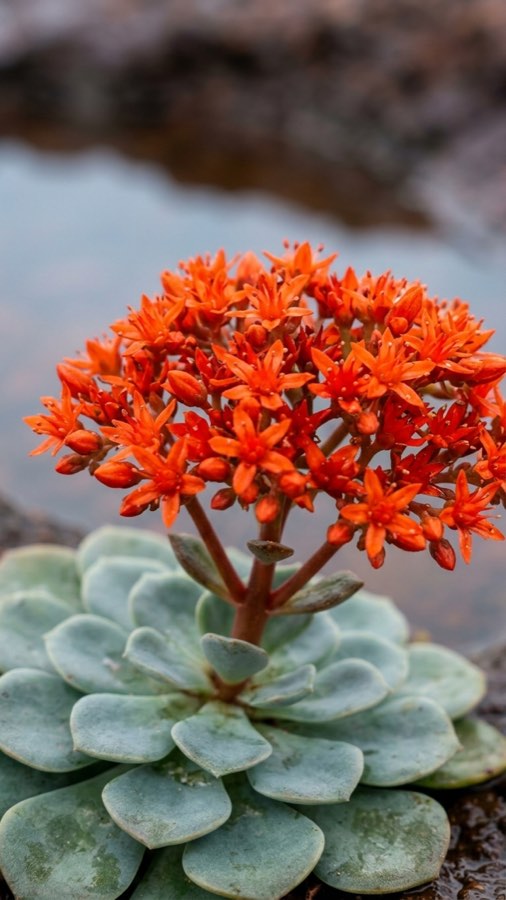 PLATE II
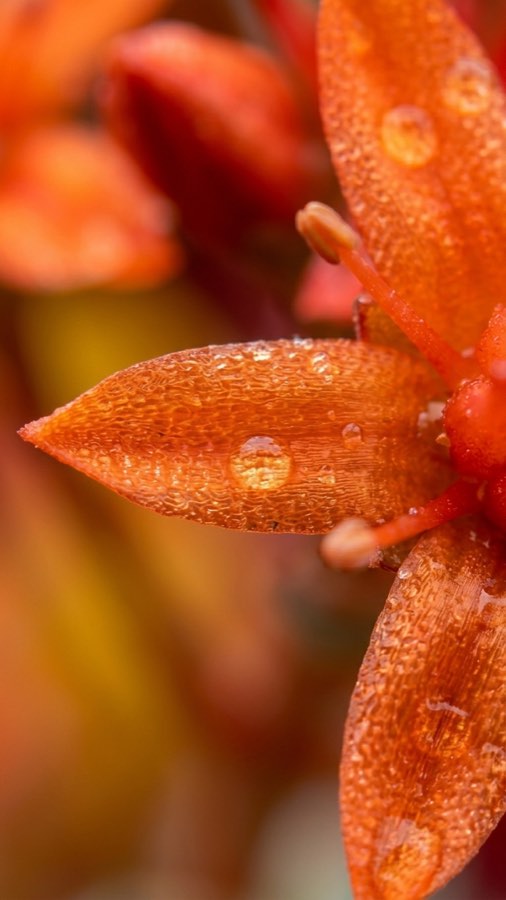 PLATE III
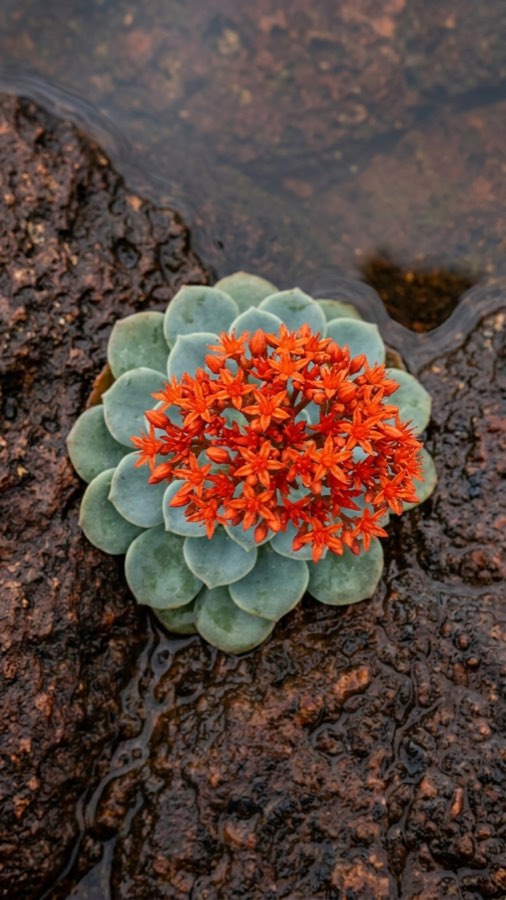 PLATE IV
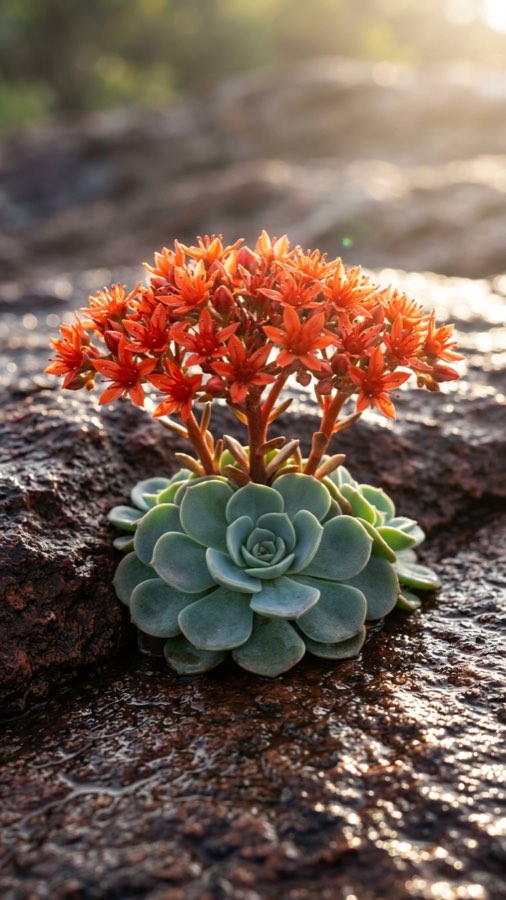 PLATE V
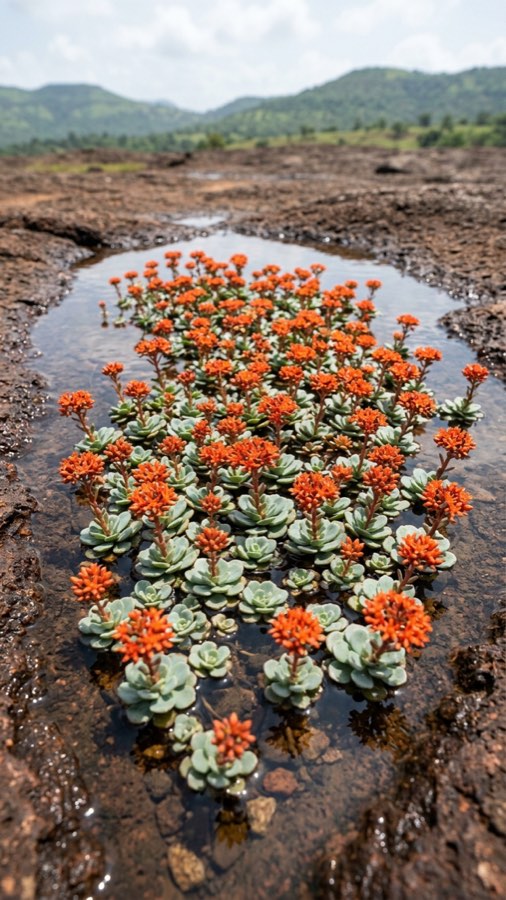 PLATE VI
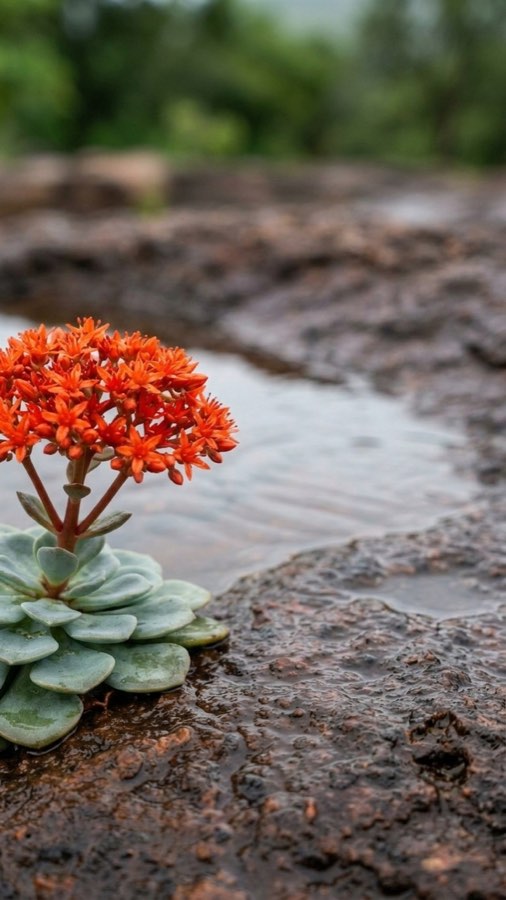 PLATE VIIPLATE VIII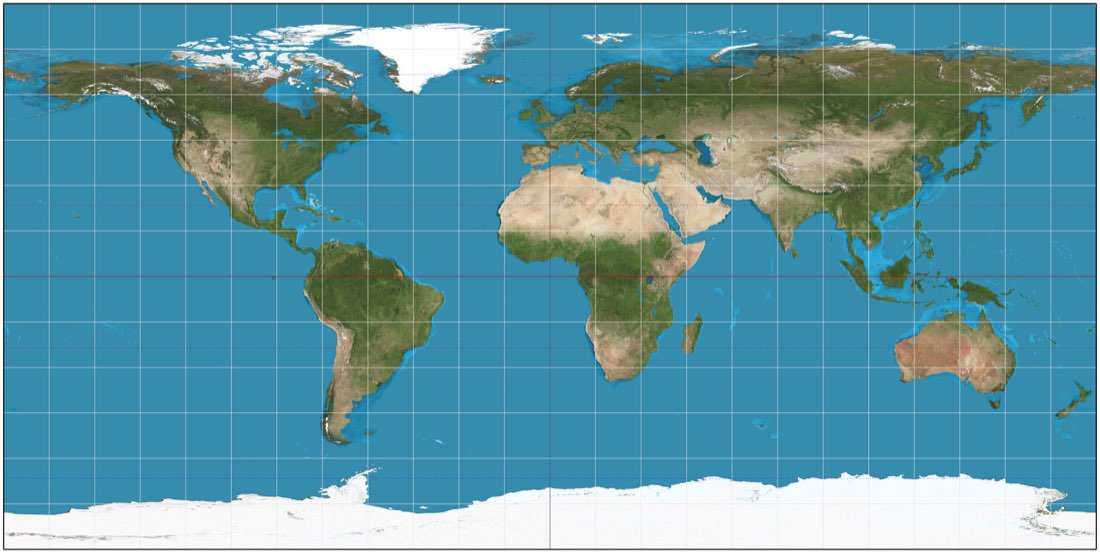
One rain alone will never wake it.
At two, it still does not stir.
The red laterite plateaus of the northern Western Ghats, India.
After a shallow basin in the rock has been wetted three times, and three times dried,
small scarlet flowers fill the floor of the hollow, blooming as one.
It seems to hold a rule of counting, so as not to mistake brief rain for the true monsoon.
Flowering follows two or three days after the third drying, and the vermilion star-shaped flowers open most fully only on clear mornings. By afternoon they begin to fold, and within five days the leaves lie against the mud as grey-green flakes. In a dried specimen it is easily confused with allied ephemeral herbs, and may well have entered older collecting sheets under another name.
The flowers show no strong mechanism enforcing outcrossing, and appear to be primarily self-compatible. Even so, during breaks in the rain, small bees and flies crossing the plateau make brief visits and move pollen among plants within the same hollow. The ripe seeds do not spring away; they adhere to the sticky bottom mud and remain dormant until the next monsoon, with few carried by wind or runoff beyond the pool.
In fields nearby, the plant is said to be called, in a Marathi form, “tīn mojnī gavat,” the grass that counts three. What farmers read is not only the flower, but the condition of the ground: a shallow hollow that has endured two false showers and is still receiving rain. The name is less a calendar than a marker for remembering the habits of rock and monsoon.