Specimen · N°007 · Rain · ▶ Film
Pluvifolia neozelandicaRainfold Herb
When rain falls, this herb folds its leaves and hides.
FOUND 45.4°S 167.2°E · Rainforest of Fiordland, southwestern New Zealand · ✝ EX · Last seen 1993
When rain falls, this herb folds its leaves and hides.
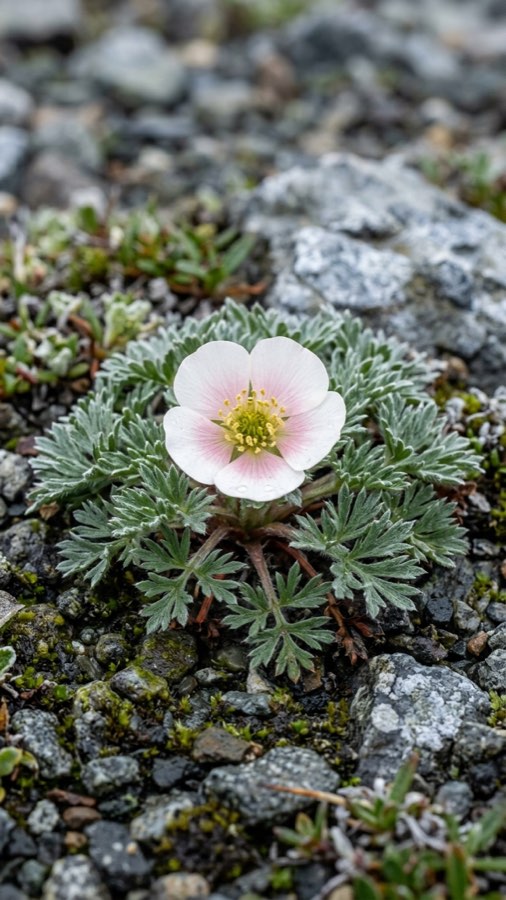
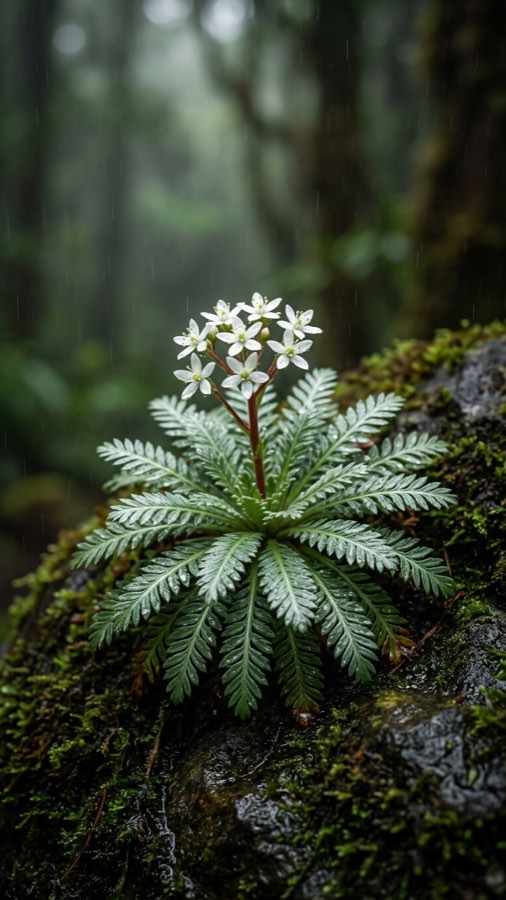
A fern-like perennial about 10–15 cm tall, spreading finely divided silver-green leaves in a radial pattern. When raindrops strike, it quickly folds the leaflets inward, opening again when the rain stops. The flowers are small white stars.
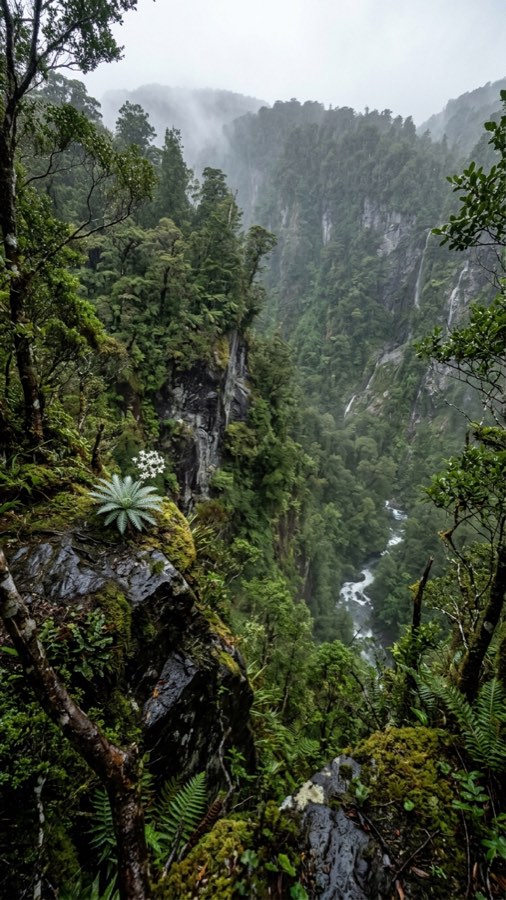 PLATE I
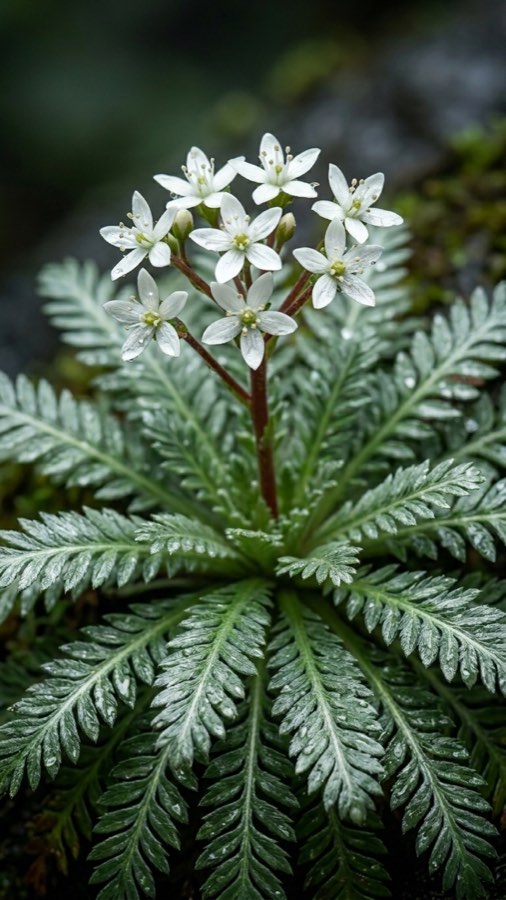 PLATE II
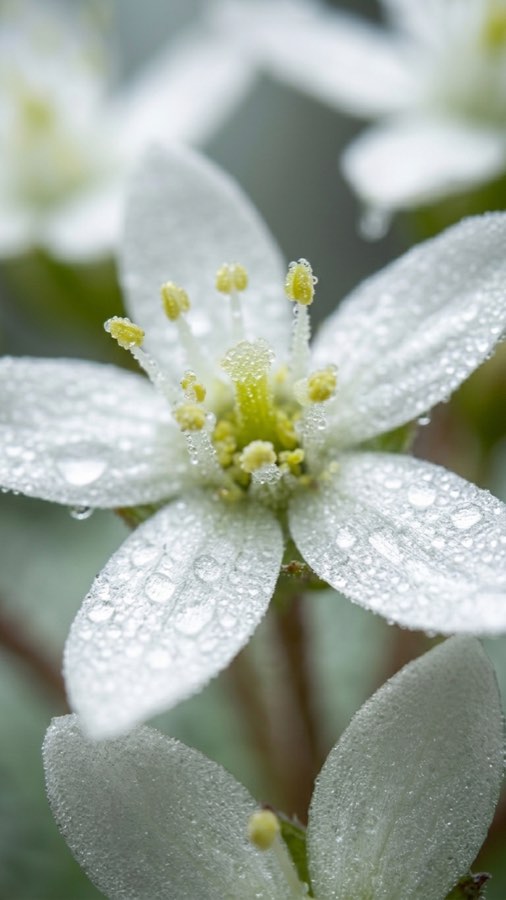 PLATE III
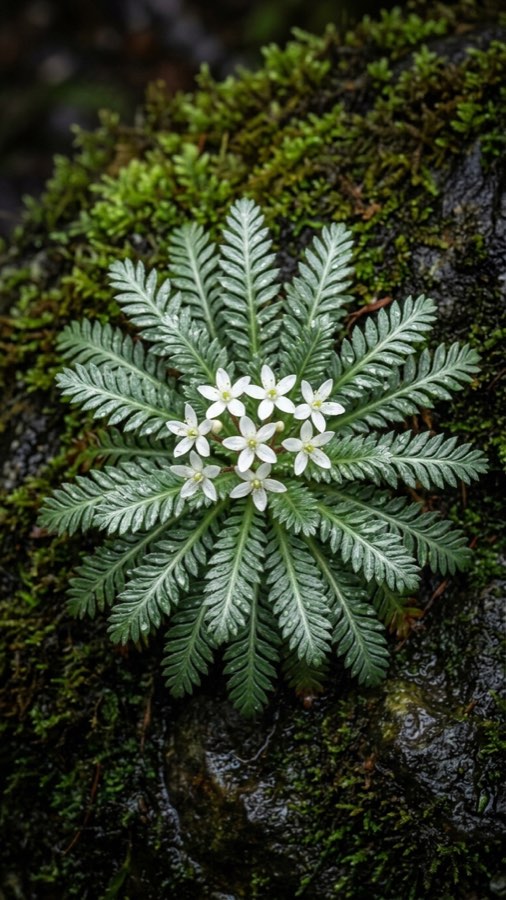 PLATE IV
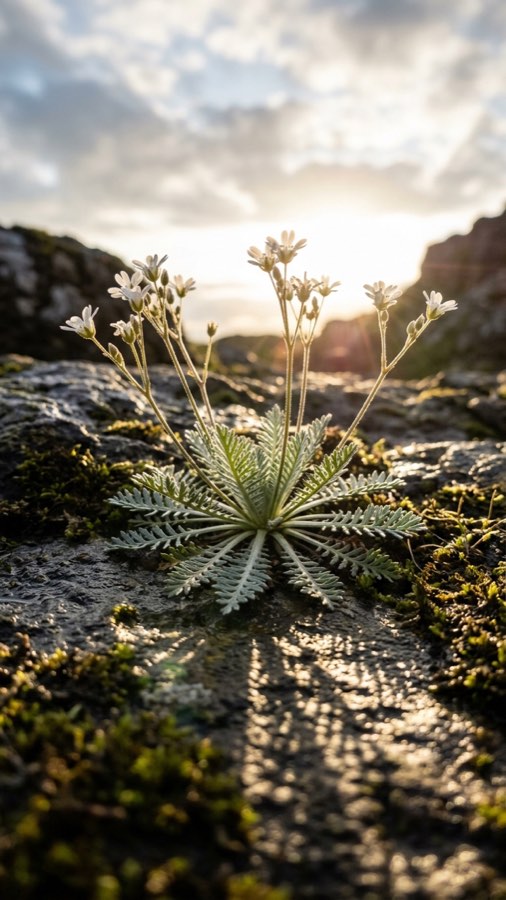 PLATE V
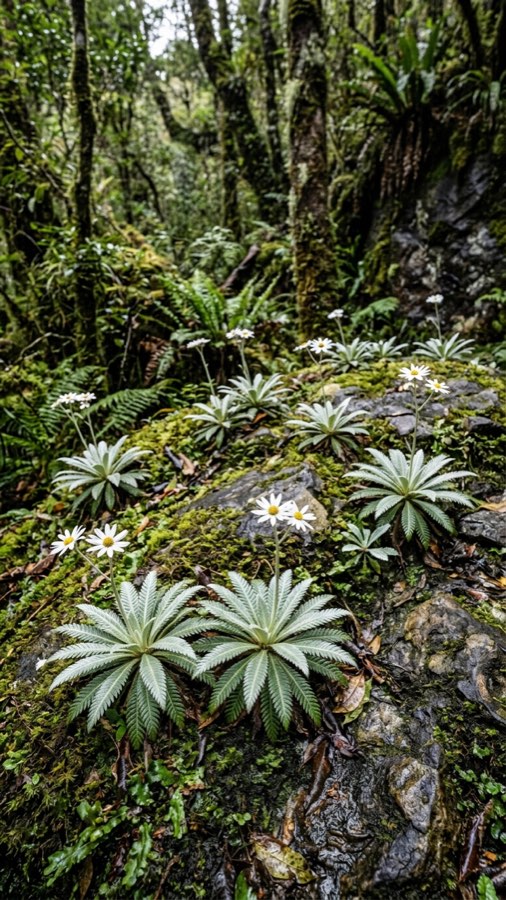 PLATE VI
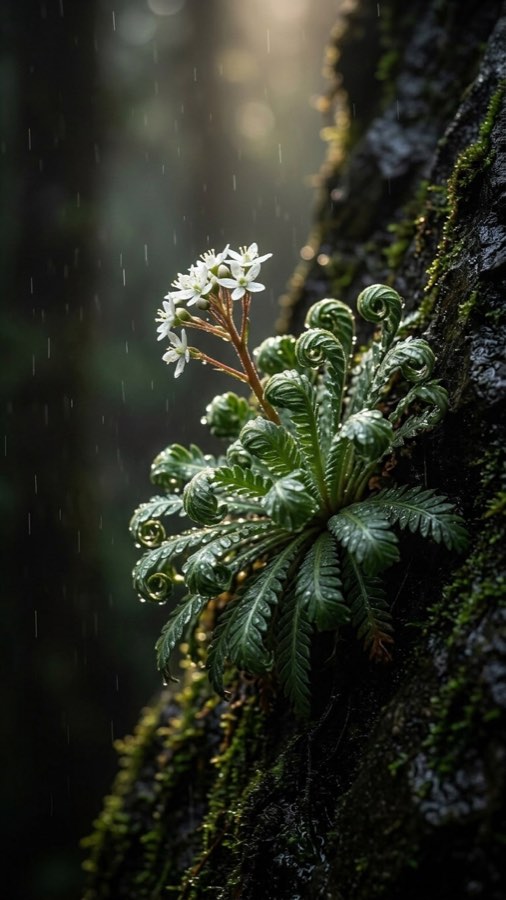 PLATE VIIPLATE VIII
When rain falls, this herb folds its leaves and hides.
As if it hated to get wet.
The rainforest of Fiordland, southwestern New Zealand.
Where drizzle falls without cease on mossy rock, the Rainfold Herb grows.
Feather-divided silver-green leaves spread in a radial fan.
At the touch of raindrops, the small leaflets fold inward one after another.
The flowers do not remain open through the day. They hold their star shape only for ten or so minutes when rainfall weakens and dripping from the rock face briefly thins. The white is not conspicuous on the forest floor, but on a dim valley wall it is signal enough for small dung- and humus-feeding flies. Visits are infrequent, and fruit set is low. The plant appears to offset this by pushing short stolons into cracks in the rock, forming small colonies along the same threads of seepage.
Its occurrence cannot be explained by dampness alone. Most plants occupy glacially polished acidic gneiss or granitic walls, restricted to ledges where humus has gathered no deeper than a toe. The roots do not search deeply for soil; they run beneath moss and intercept mineral-poor seep water. The silver-green leaflets and low stature seem less an adaptation to strong light than a way of limiting nutrient loss from leaves that are almost constantly wet.
“Rain-folding” appears to have been a practical name rather than an old mythic one, used by coastal hunters, survey assistants, and those who read deer tracks. On mornings when the plants close together, they are probably responding to falling pressure and saturated mist before the rain itself arrives. They are absent from sunnier valleys and limestone cliffs, and the name persists mainly in dark side gullies where long rain can erase a path. The places where it is missing tell much about the plant.