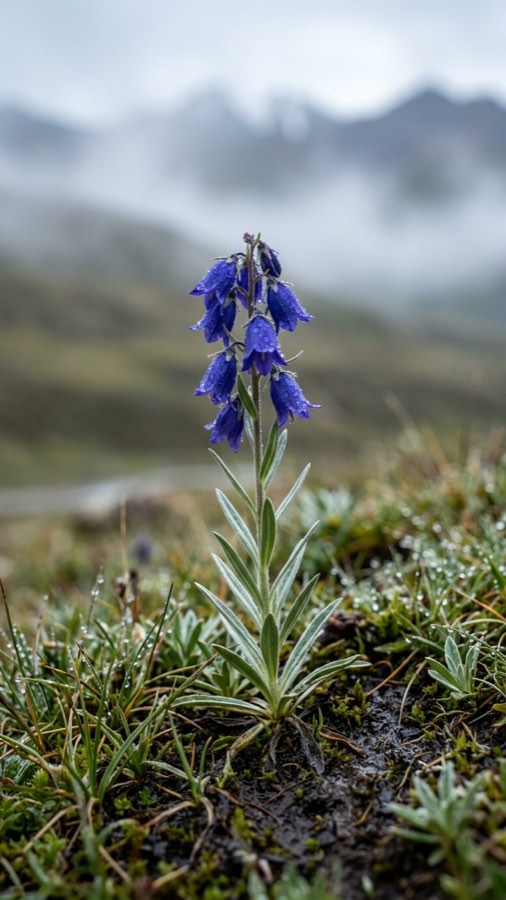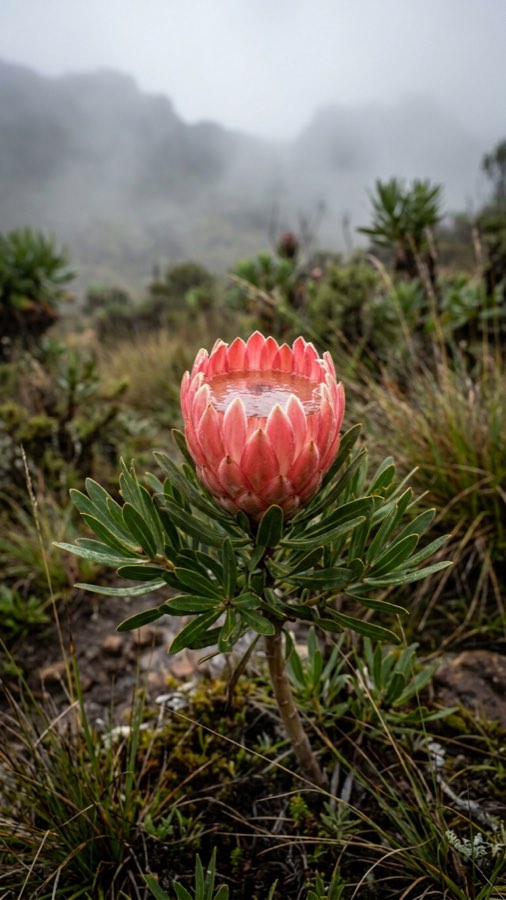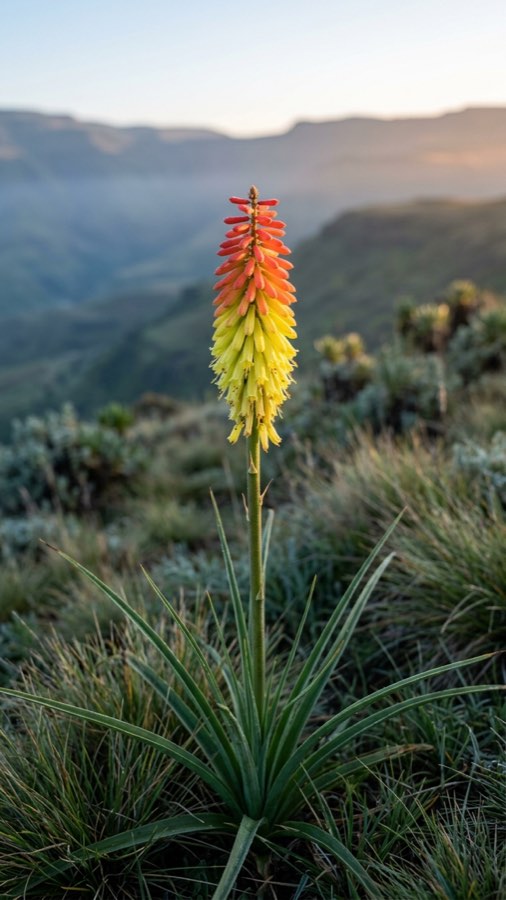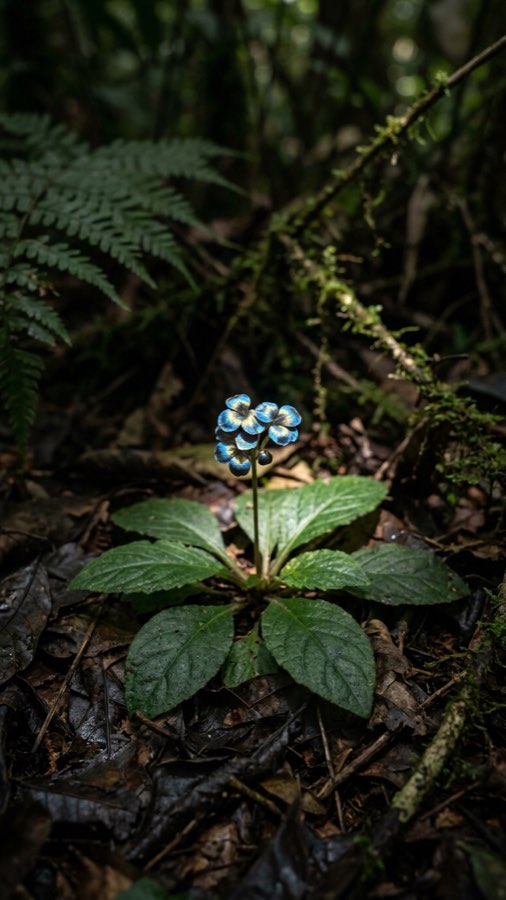
Specimen · N°057 · 雷 · ▶ Film
Ceraunocandela furcataThunder Candelabra
この木の枝の数は、耐えた雷の数だけ増えます。
FOUND 0.7°S 36.5°E · アフリカ東部の高地、標高約二千二百メートルの玄武岩台地 · ✝ EX · Last seen 1977
この木の枝の数は、耐えた雷の数だけ増えます。
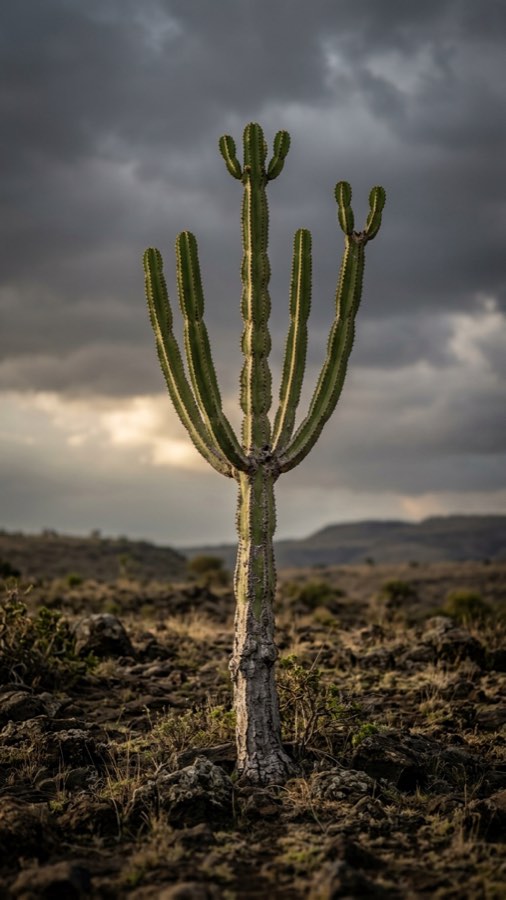
Thunder Candelabraは、乾いた高地の草原に孤立して立つ、高さ三〜五メートルの柱状の多肉plant。太い緑の幹には縦の稜が走り、Waterを蓄えた厚い組織と厚いコルク質の樹皮を持つ。周囲に高い木がないため、雷Rain期には格好の避雷針になる。落雷を受けると多くは頂芽が焼け落ちるが、Waterを含んだ組織が電流を逃がし、株そのものは生き延びる。頂芽を失うと、それまで抑えられていた側芽がいっせいに動きだし、傷の下から数本の新しい枝が垂直に伸びる。こうして一度の落雷ごとに幹が分かれ、燭台のような姿になる。枝分かれの数は、その株が耐えた嵐の回数とほぼ一致する。最も雷の落ちる台地のmarginには、腕を何十本も広げた老木が立ち、その輪郭そのものが、通り過ぎた嵐の履歴になっている。
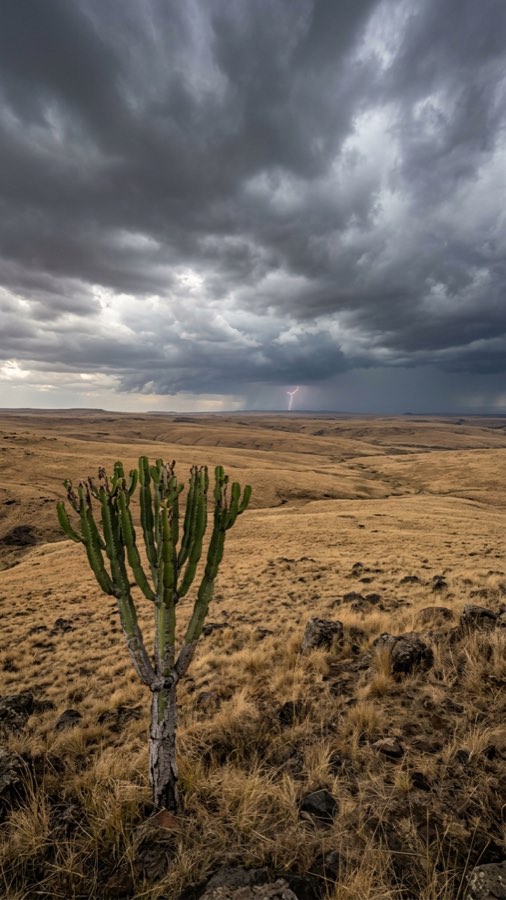 PLATE I
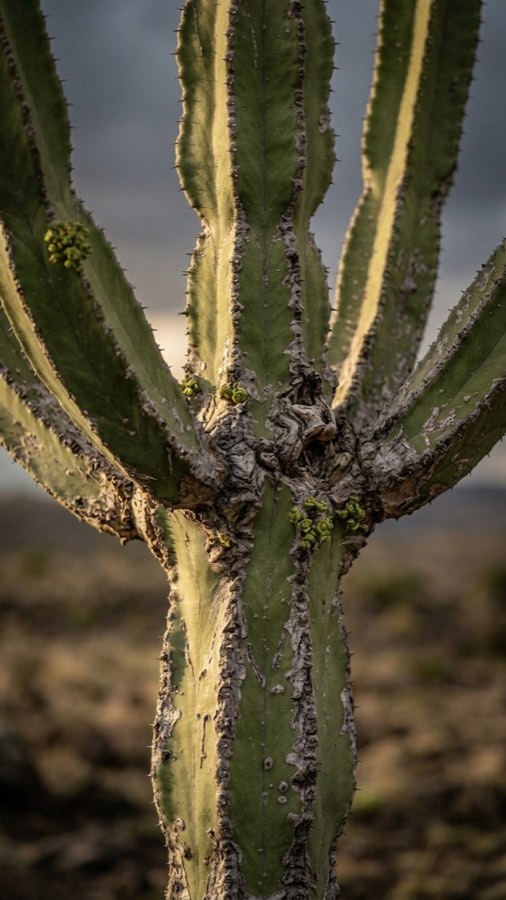 PLATE II
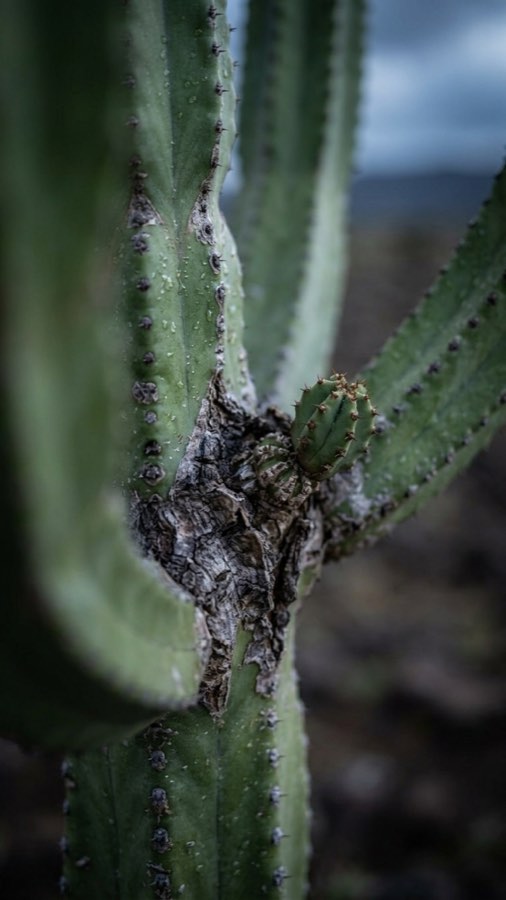 PLATE III
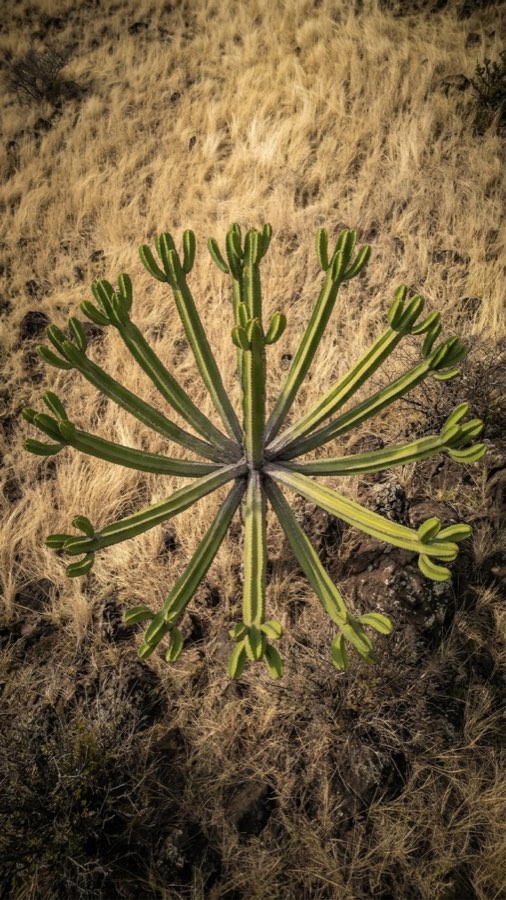 PLATE IV
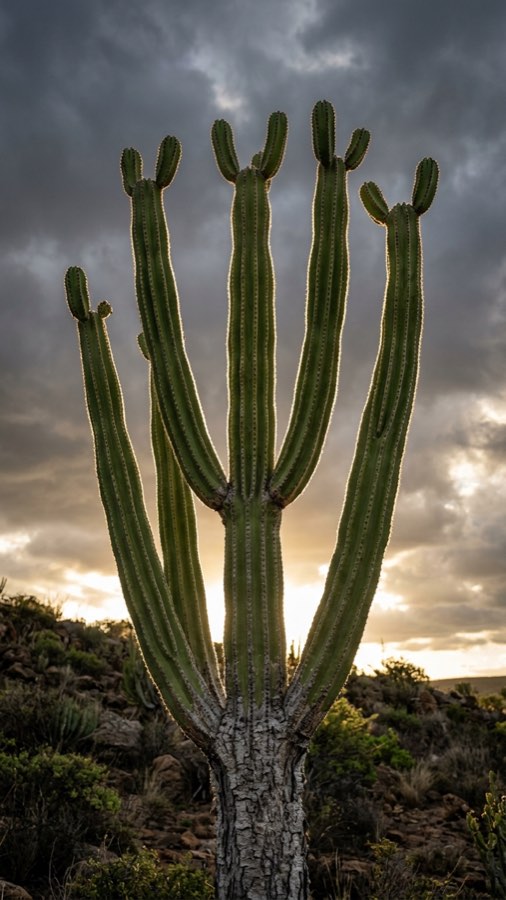 PLATE V
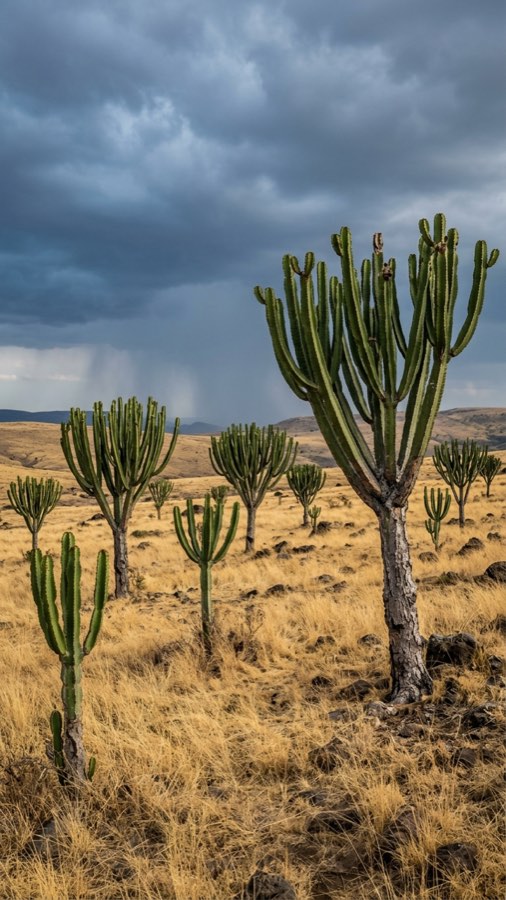 PLATE VI
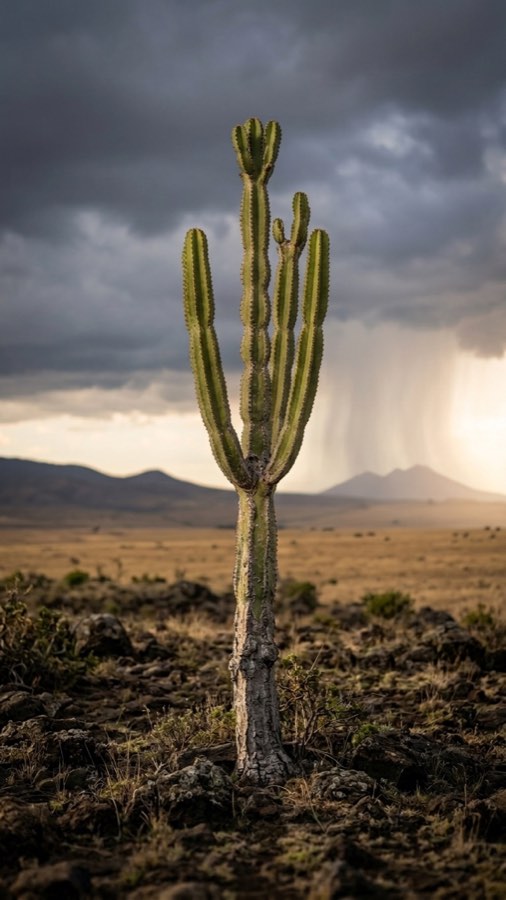 PLATE VIIPLATE VIII
この木の枝の数は、耐えた雷の数だけ増えます。
頂芽が落雷で焼け落ちるたび、抑えられていた側芽が新しい枝を伸ばすからです。
アフリカ東部の高地、標高二千メートルの吹きさらしの台地。
周りに高い木のないこの平原で、柱のようなThunder Candelabraは格好の避雷針になります。
落雷を受けても、Waterを蓄えた太い幹が電流を逃がし、株は生き延びます。
けれど成長点を失った幹は、傷の下から数本に枝分かれします。
Only on mornings when water can still be heard in the gully does the cup-shaped flower rise a few centimeters above the mud. Its anthers appear to touch the stigma during the same opening, so most flowers likely set seed by self-pollination. Before the mud had fully dried, however, I saw signs that a small hoverfly had carried pollen once between plants. The flower is not the main means by which the colony moves; it is better understood as a small insurance against sameness where erosion continues.
When I lifted plants exposed by the current, the ends of the main roots were not mere torn fragments but pale, thickened bodies. Inside the thin cortex were minute points resembling dormant buds, and the bodies rounded readily in muddy water. Because they lodge together at bends in rills and behind small stones, a week later the young rosettes appear in a line of nearly equal height along the fresh failure edge.
On dry days, this plant almost refuses to become a specimen. The leaves are less grey-green than mud-coloured, half buried, and were probably dismissed in notebooks as seedlings of small Asteraceae or Brassicaceae already known from the badlands. Flowering ends within two or three days after rain, while the slopes most visible from tourist paths are also the ones compacted and drained into relative stability. On ground that no longer moves, the evidence for this plant disappears with it.