Specimen · N°065 · Mist · ▶ Film
Clepsydranthus vergensWaterclock Bloom
満ちたflowerだけが、ひとりでに傾いてWaterをこぼします。
FOUND 0.4°N 29.9°E · 東アフリカの高地、標高約2800mのcloudMistに包まれた尾根の低木林 · ✝ EX · Last seen 2015
満ちたflowerだけが、ひとりでに傾いてWaterをこぼします。
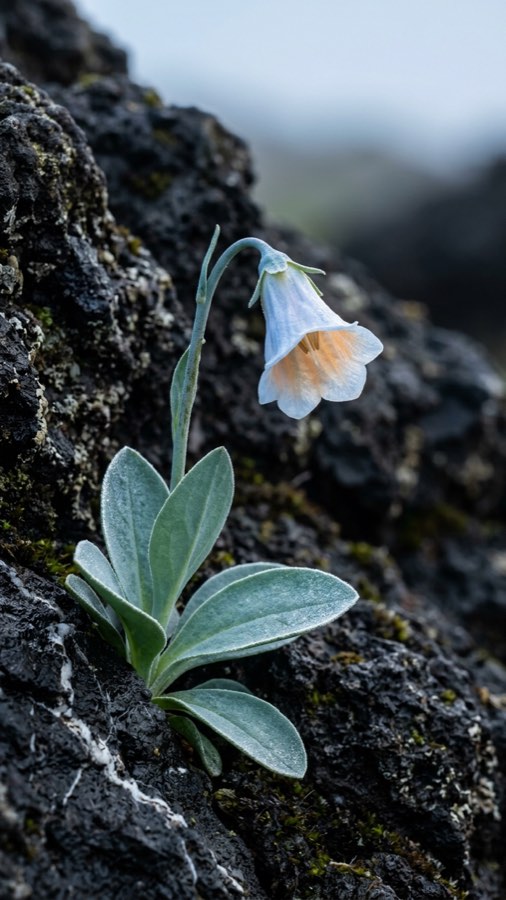
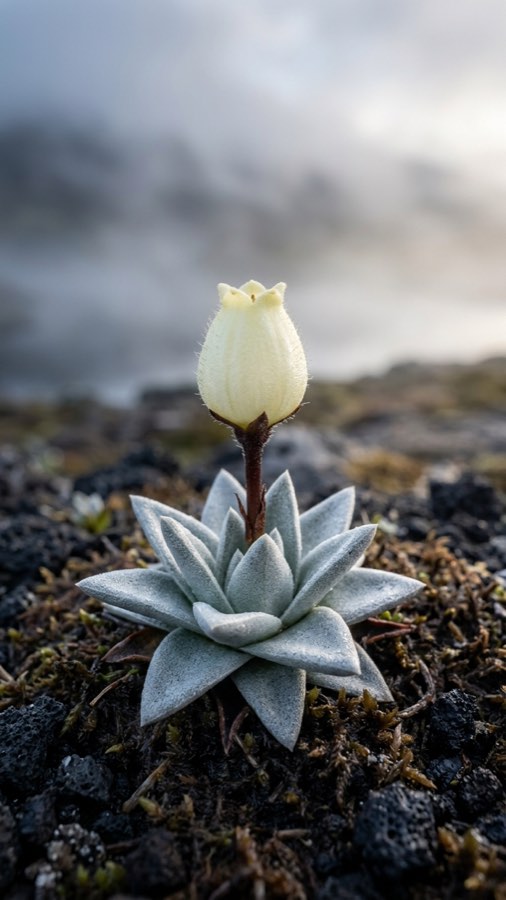
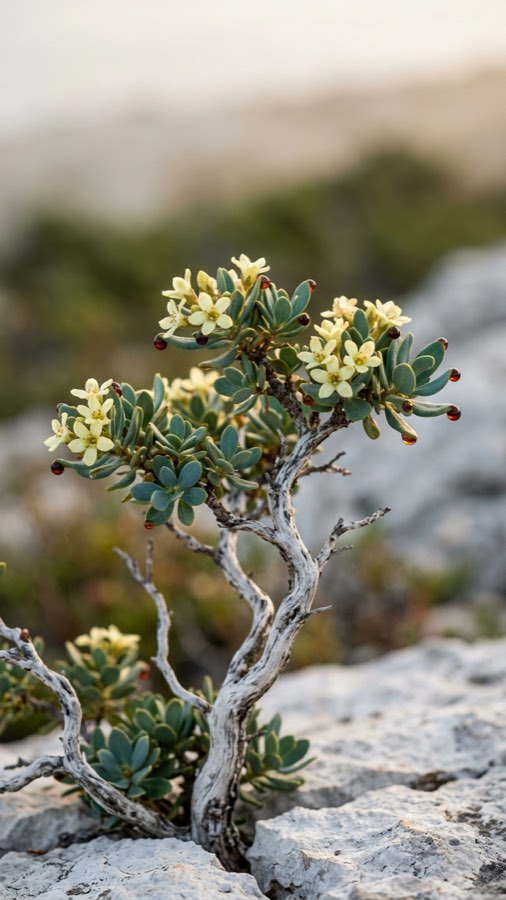
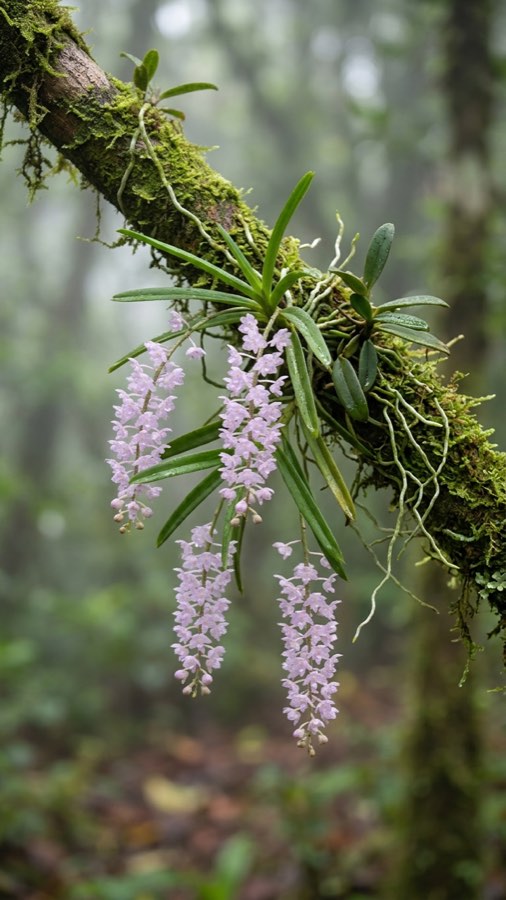
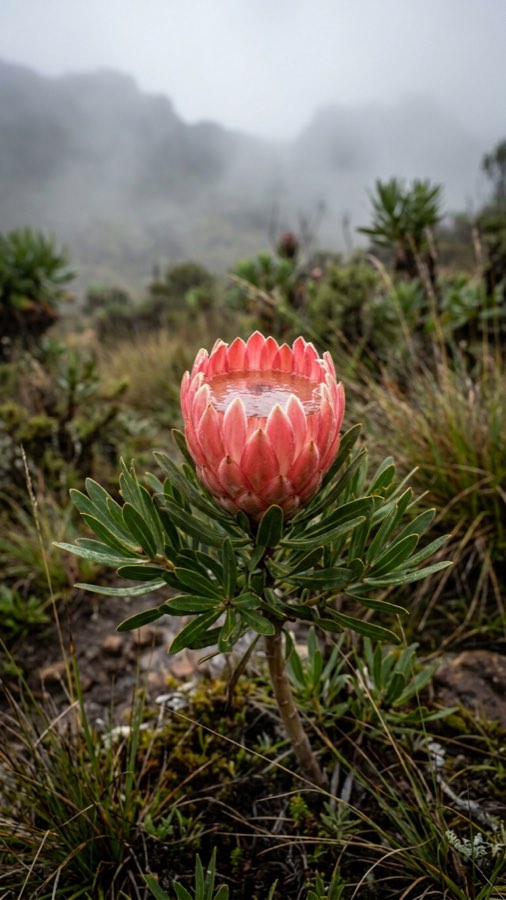
Waterclock Bloomは、Mistの絶えない高地の尾根に育つ低木で、枝先にこぶし大の球形の頭flowerをひとつ掲げる。flowerは硬い革質の珊瑚色の苞が幾重にも重なって深い杯をつくり、内側にRainとMistのしずくを溜めていく。杯の底の澄んだWaterには、やがて藻や微小な生き物が棲みつき、小さなWaterたまりの生態系になる。プロテアの仲間のように厚い苞はWater分をよく保つ。Waterが満ちるとflower全体の重心が上がり、しなやかな茎の付け根からゆっくり傾いて、澄んだWaterを苞のmarginからこぼし出す。軽くなったflowerはまた起き上がり、次のMistとRainを溜めはじめる。満ちては空になるこの動きは自重と茎のしなりだけで起こり、まるでWater時計のように繰り返される。
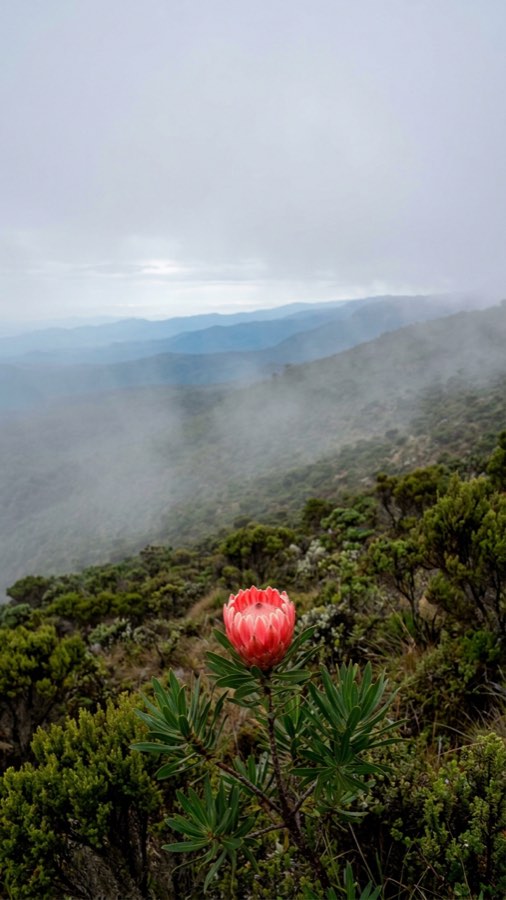 PLATE I
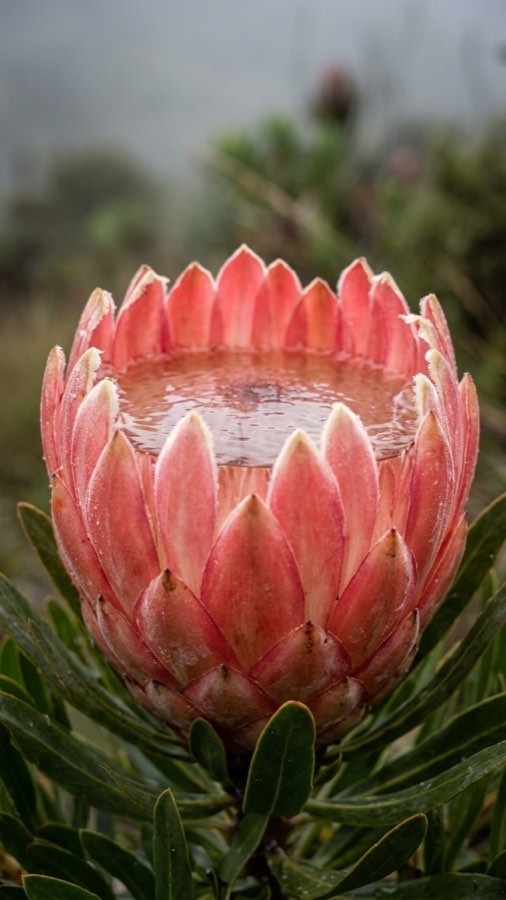 PLATE II
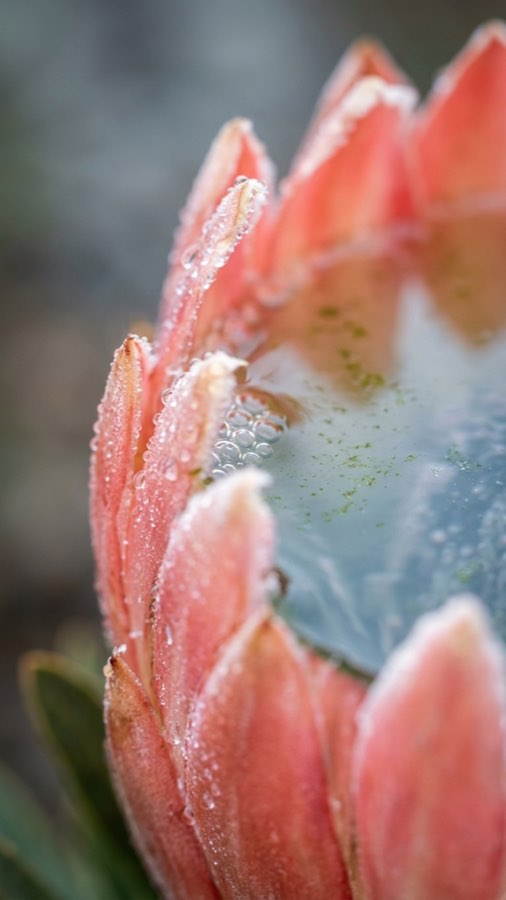 PLATE III
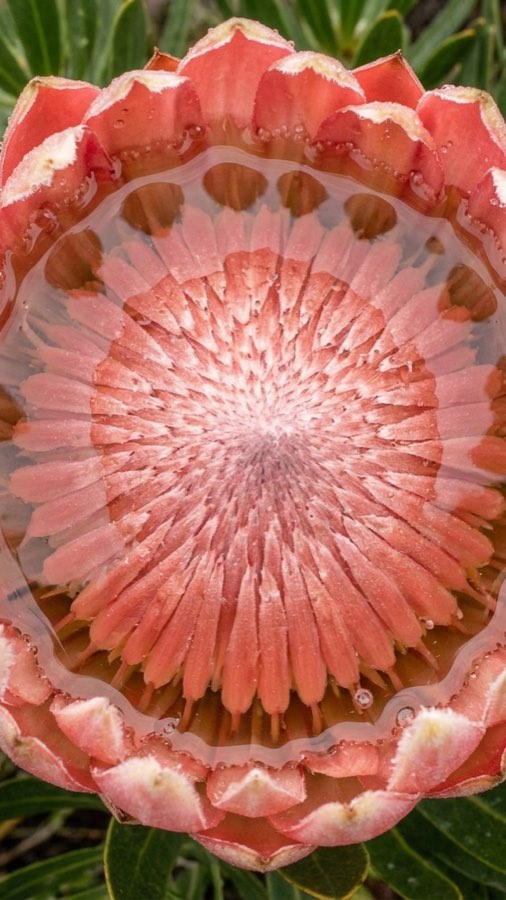 PLATE IV
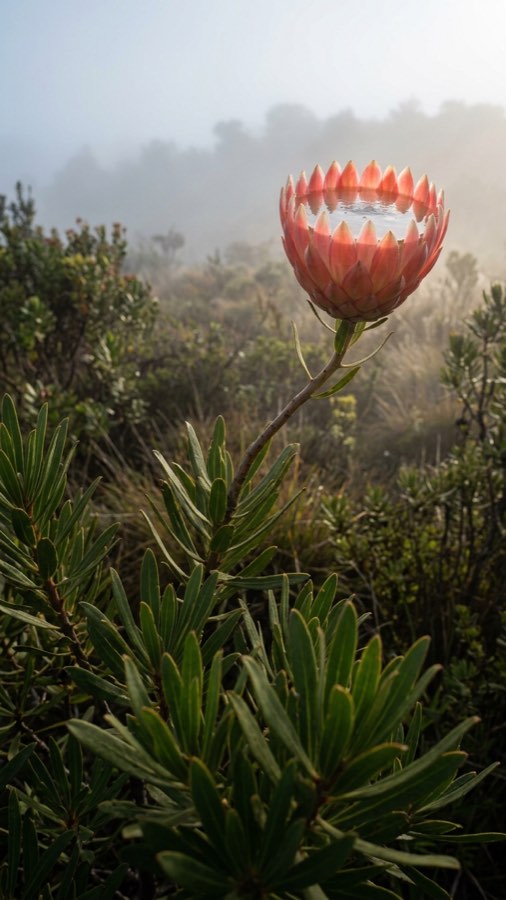 PLATE V
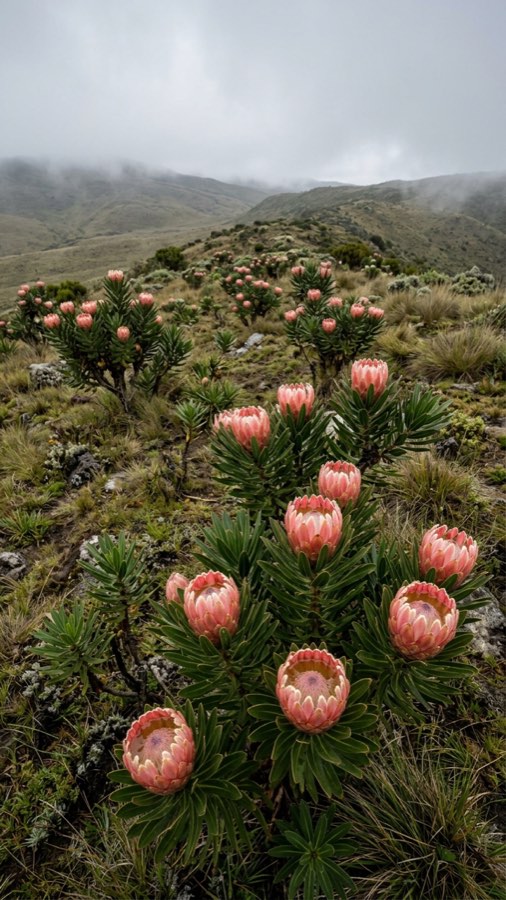 PLATE VI
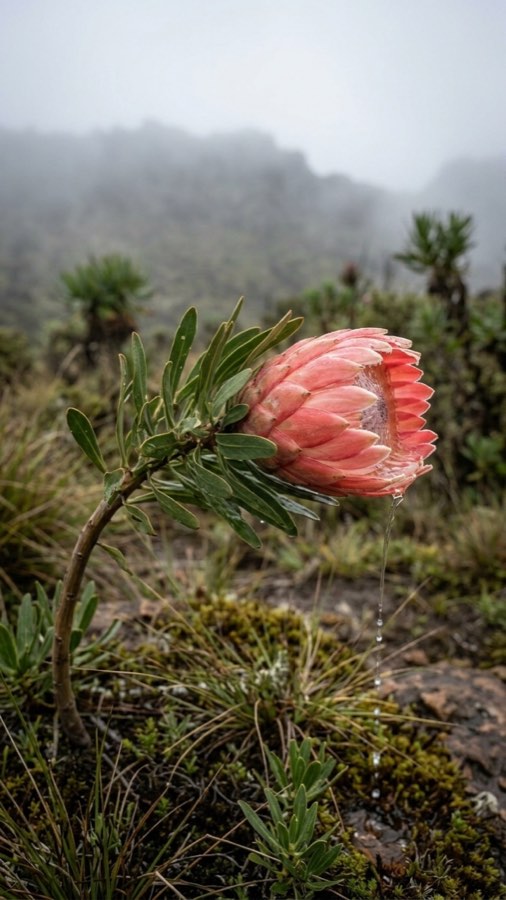 PLATE VIIPLATE VIII
満ちたflowerだけが、ひとりでに傾いてWaterをこぼします。
杯のようなflowerに溜まったRainWaterが、重くなりすぎるからです。
東アフリカの高地、Mistの絶えない尾根の低木林。
こぶし大の球形のflowerが、硬い苞で深い杯をつくり、MistとRainのしずくを溜めます。
Waterがいっぱいになると、flowerは重みで静かに傾き、澄んだWaterをこぼして、また起き上がります。
満ちては空になるその繰り返しは、まるでWater時計のようです。
When the exposed lake bed is opened, the cracked clayey silt at the surface gives way after only two finger-widths to a cooler layer of fine sand. The thick root of Telerhiza follows this boundary sideways. Above it, the ground dries and splits; below it, a slightly saline dampness remains. Its habit of running outward rather than downward appears to be an adjustment to these shallow threads of water along the shore.
The flower opens only slightly in the cool of morning and closes its cup before noon. Even on days when no insects were seen, dust from the aged anthers had fallen onto the stigma of the same flower. If distant shoots are often branches of one root, crossing with another plant need not be frequent. Flowering in dry years seems less a means of abundance than an insurance against the eventual breaking of the old root.
Beneath a withered flower lie only a few light seeds, thin enough to be worked into the mud by the next flooding. Once the water returns, the shoots collapse and leave no mark of where they stood. Yet fishing and herding families along the shore read low-water years from the spread of these flowers. A flat where they appear widely is said to remain poor for landing boats, but suitable for grazing, for some time afterward.