Specimen · N°025 · Fire · ▶ Film
Pyrophila resurgensFireborn Bloom
Only after fire has passed does this flower appear.
FOUND 33.9°S 19.8°E · Dry grassland of the Cape region, South Africa · ✝ EX · Last seen 2023
Only after fire has passed does this flower appear.
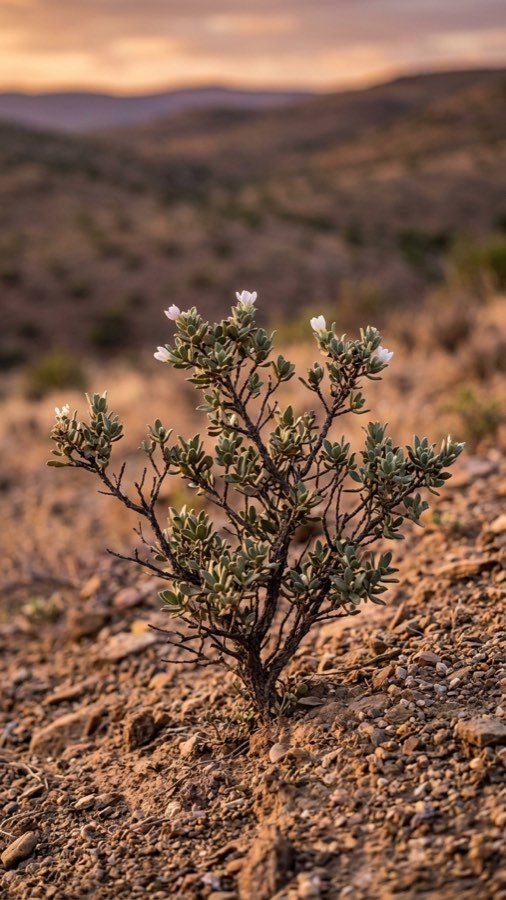
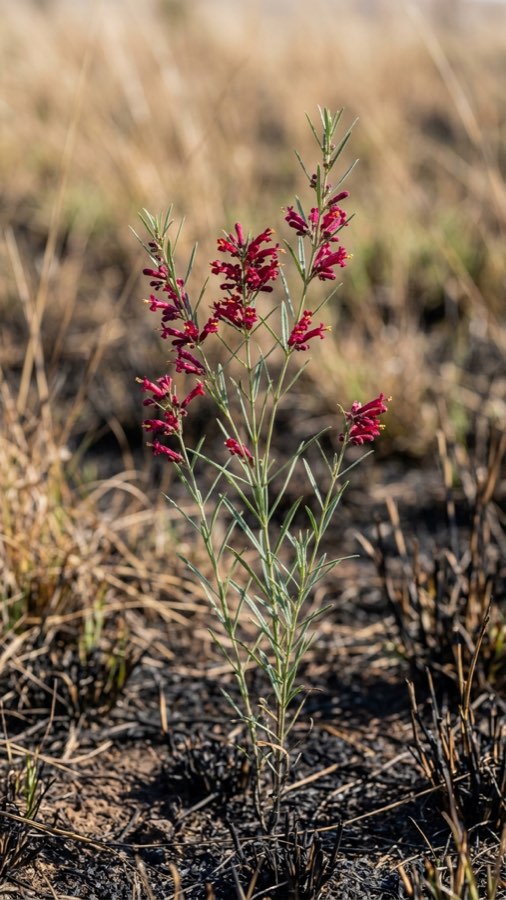
A grassland plant 15–25 cm tall, bearing a few small crimson flowers atop slender stems, with narrow grey-green leaves. Its seeds sleep underground and wake only on touching wildfire smoke, sprouting all at once on the blackened, burned ground.
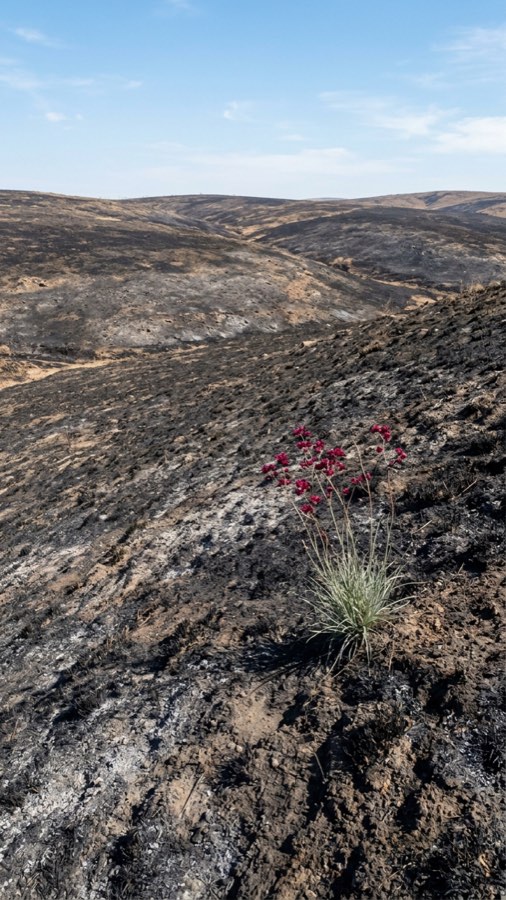 PLATE I
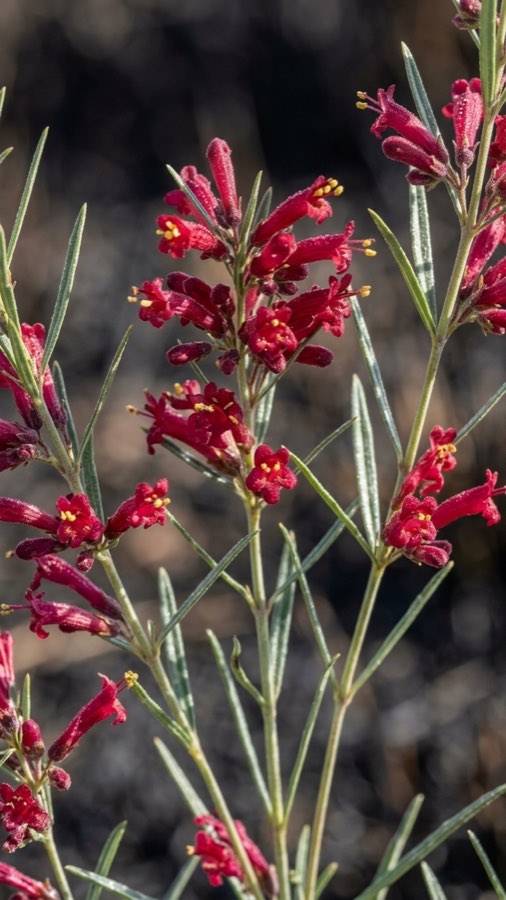 PLATE II
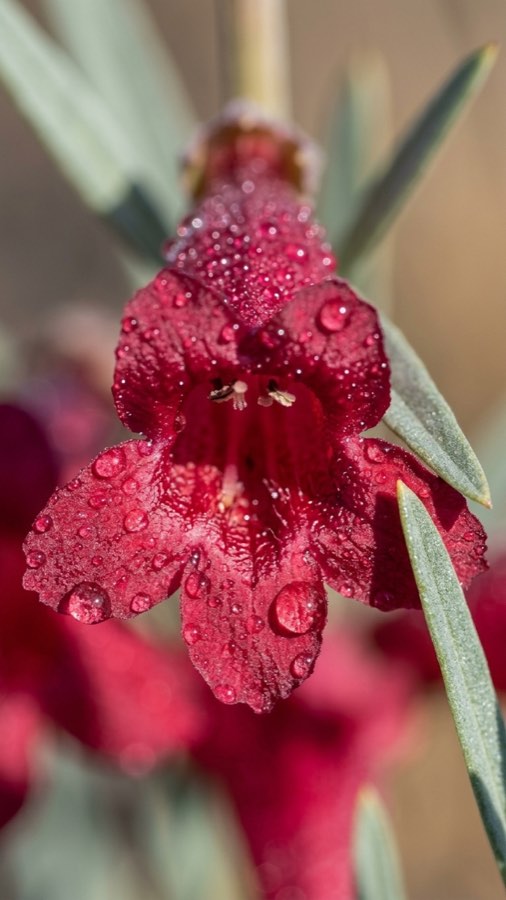 PLATE III
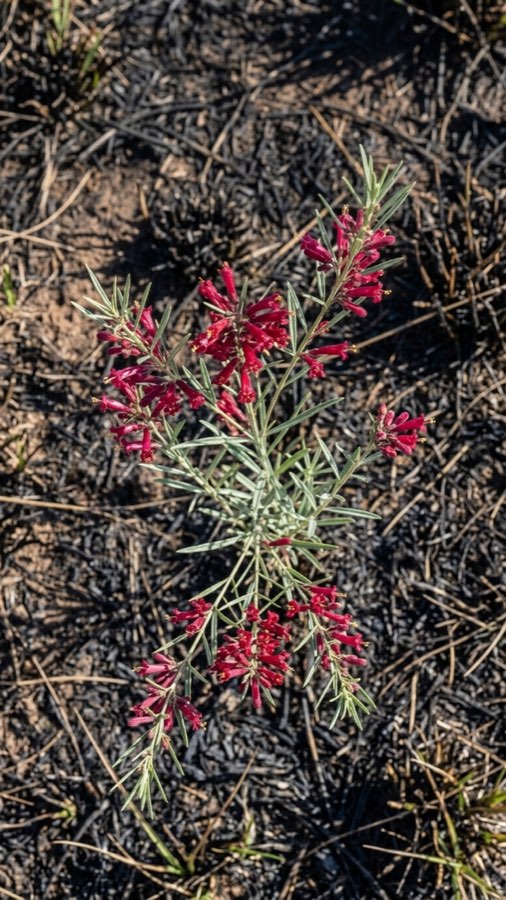 PLATE IV
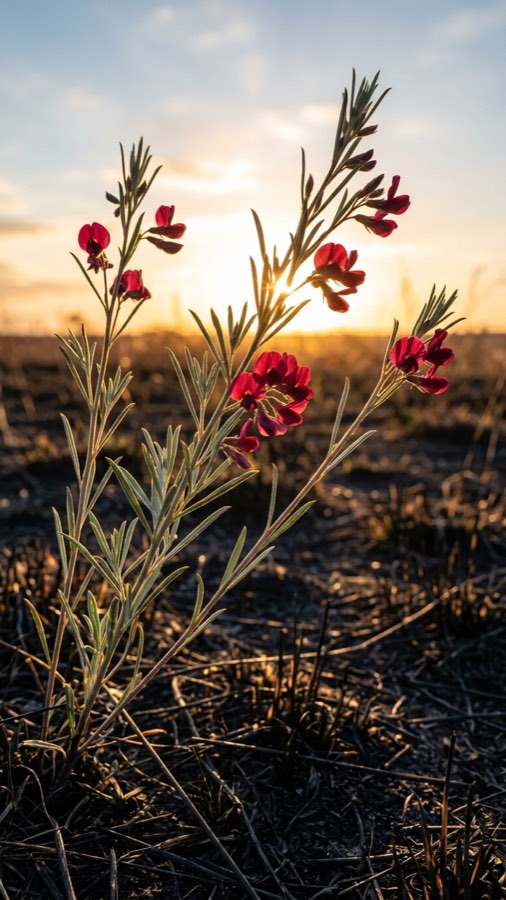 PLATE V
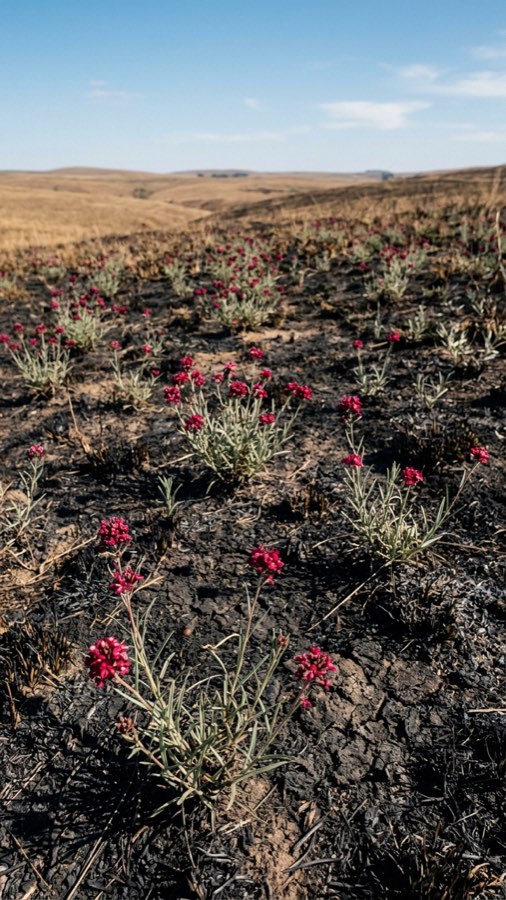 PLATE VI
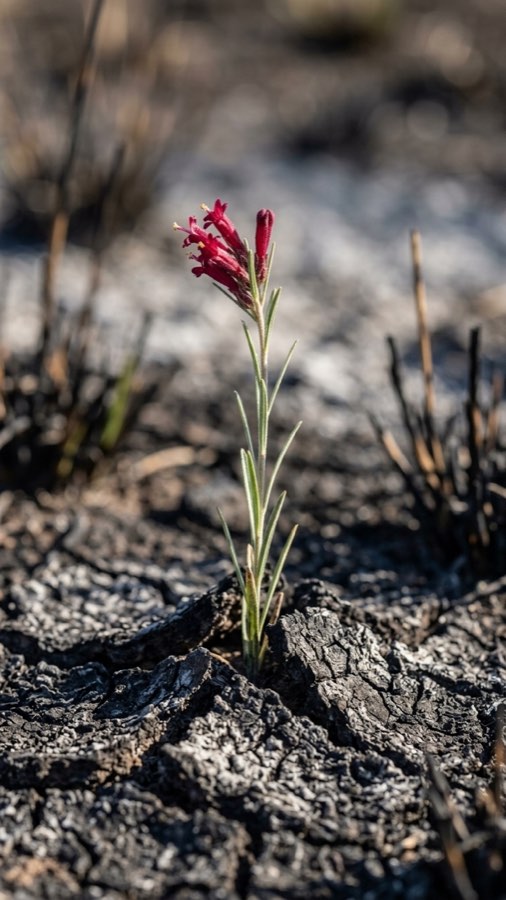 PLATE VIIPLATE VIII
Only after fire has passed does this flower appear.
The seed sleeps on until it senses the scent of smoke.
The dry grassland of the Cape, South Africa.
Hills that wildfire races through once every few years.
The Fireborn Bloom's seeds wait underground, waking only at the touch of smoke.
On the burned, blackened ground, small crimson flowers open all at once.
On the hill crests, Pyrophila was most abundant only in shallow acidic soils weathered from sandstone. It was sparse on sticky shale slopes, and in iron-red hollows it produced mostly leaves. Soil too poor in ordinary years receives a brief rise of phosphorus and potassium after ash settles. The plant appears to use that short reprieve before its competitors return.
After the third week following fire, the flowers collapse quickly and the shoots vanish among dry grass litter. By the next month, the only evidence is a narrow ripe capsule. Its scarcity in collections is therefore unsurprising. In old herbarium packets, it may have been gathered once as a related post-fire annual, then separated from its label into another bundle.
The stands bloom all at once, yet almost no pollen carrier is seen by day. The deep red corolla darkens toward evening, and the anthers loosen before dawn, leaving room for visits by small nocturnal moths. Even isolated plants, however, set a few fruits. In the brief post-fire season, the plant likely waits for crossing but can finally self-pollinate to maintain its buried seed bank.