Specimen · N°070 · Mist · ▶ Film
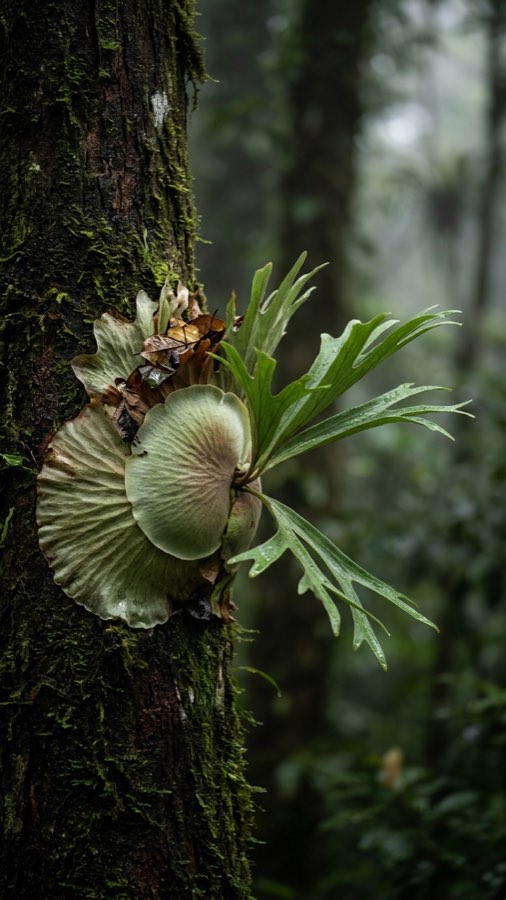
Clypeoceras indicansCompass Staghorn Fern
このシダは、土のない幹の上でしか生きられません。
FOUND 5.9°N 116.4°E · ボルネオ島の山地cloudMist林 · ✝ EX · Last seen 2019
このシダは、土のない幹の上でしか生きられません。
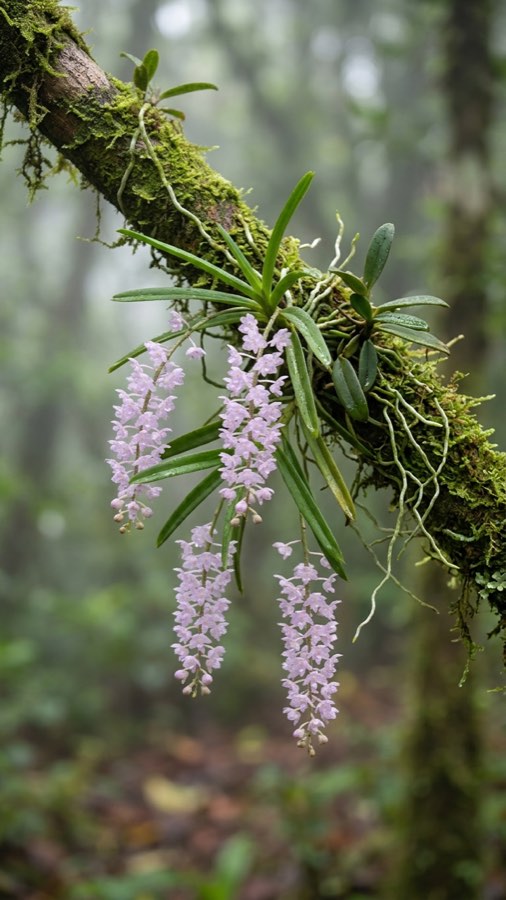
Compass Staghorn Fernは、苔むした大木の幹に貼りつく着生シダ。株の基部には円い盾状のleaf(貯Waterleaf・盾leaf)が幹に密着して重なり、その上に鹿の角のように枝分かれした細長いleaf(胞子leaf・角leaf)が突き出す。盾leafは上向きに反ったmarginで、落ちleaf・樹皮くず・RainWaterを受け止め、幹との隙間に溜め込む。溜まった有機物は微生物と根に分解され、自前の腐植ポケット、つまり養分の貯蔵庫になる。角leafはlightと幹をflow落ちるRainWaterを求めて伸びるため、Waterと養分の多い側へ角の向きが傾く。だから角が指す先の根元には、いちばん厚い腐植が溜まっている。着生ゆえに土を持たない代わりに、落ちてくるものを集めて自分の土をつくる。乾季に幹が乾いても、盾leafの内側の腐植は湿りを抱えたまま、株を静かに支えつづける。
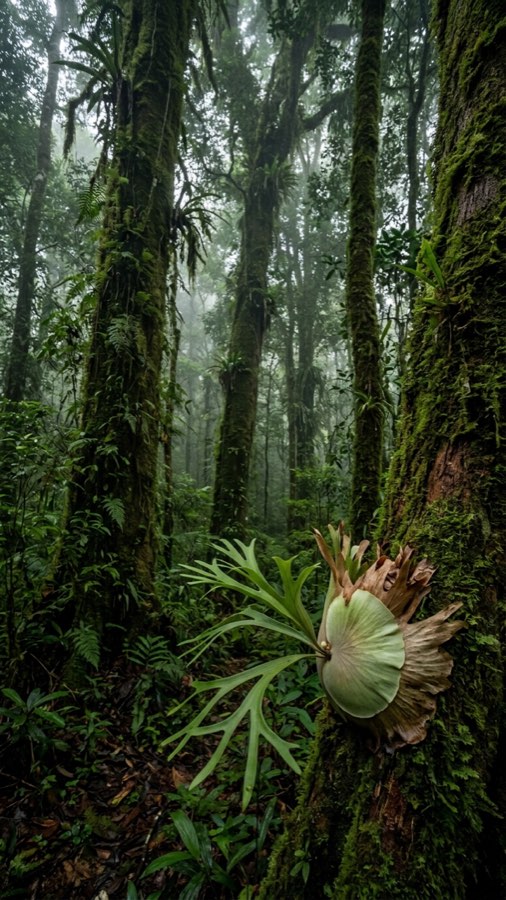 PLATE I
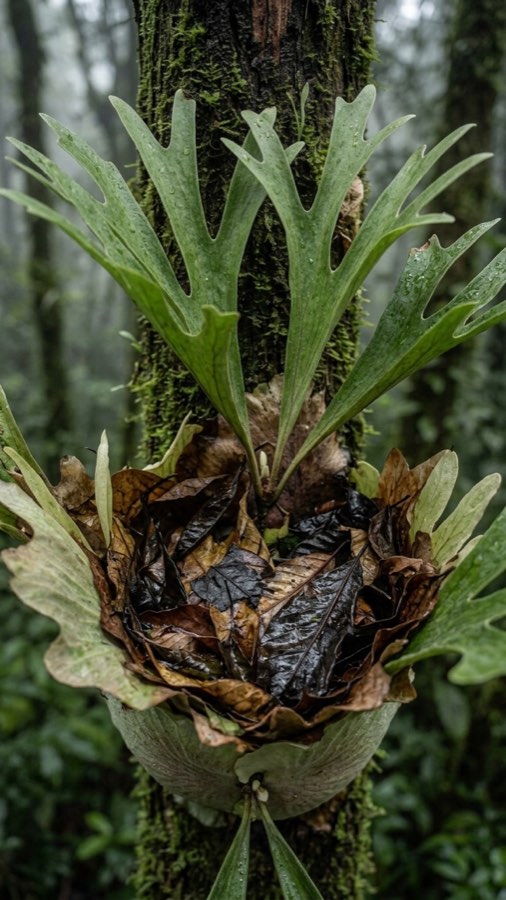 PLATE II
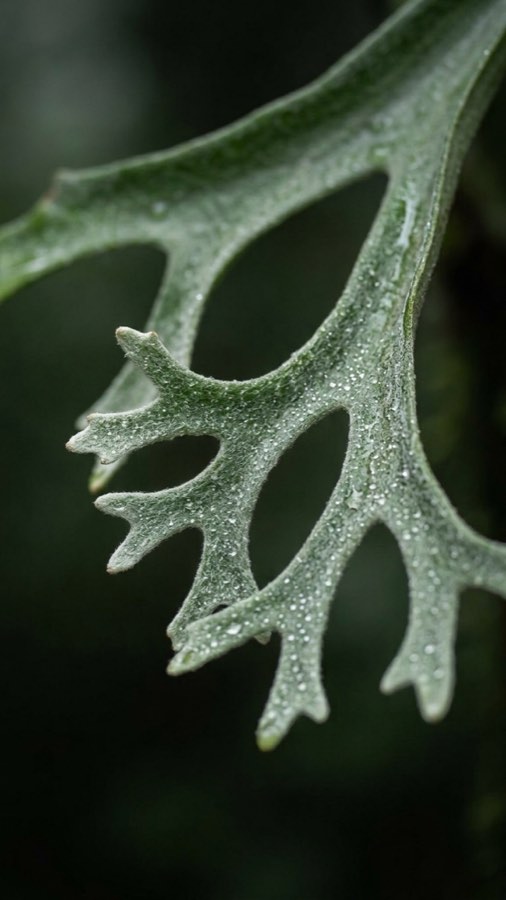 PLATE III
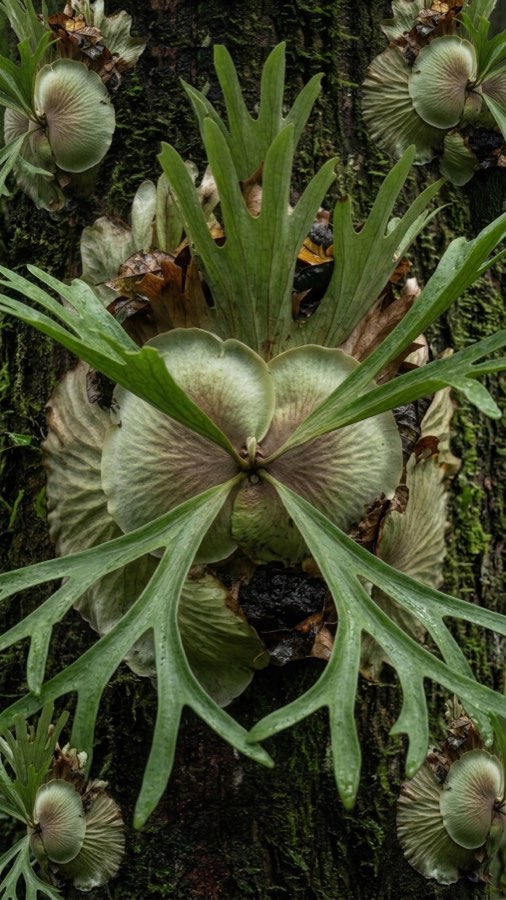 PLATE IV
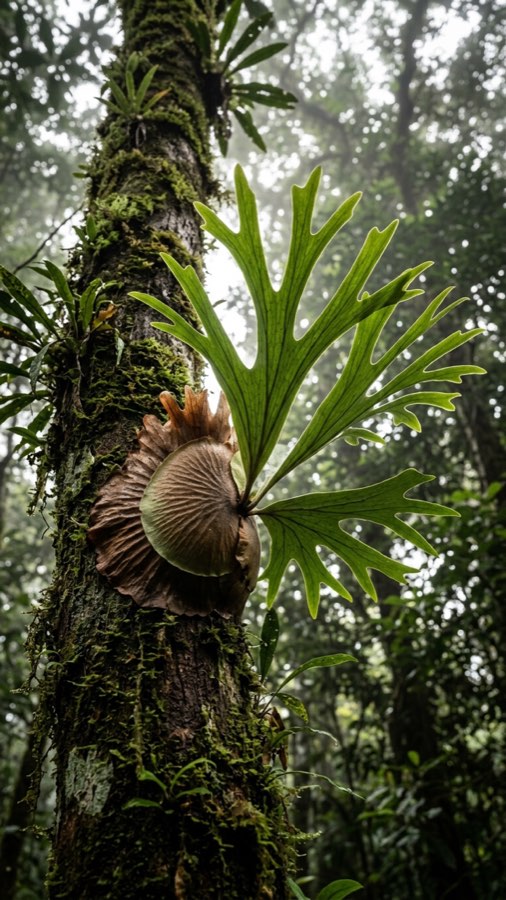 PLATE V
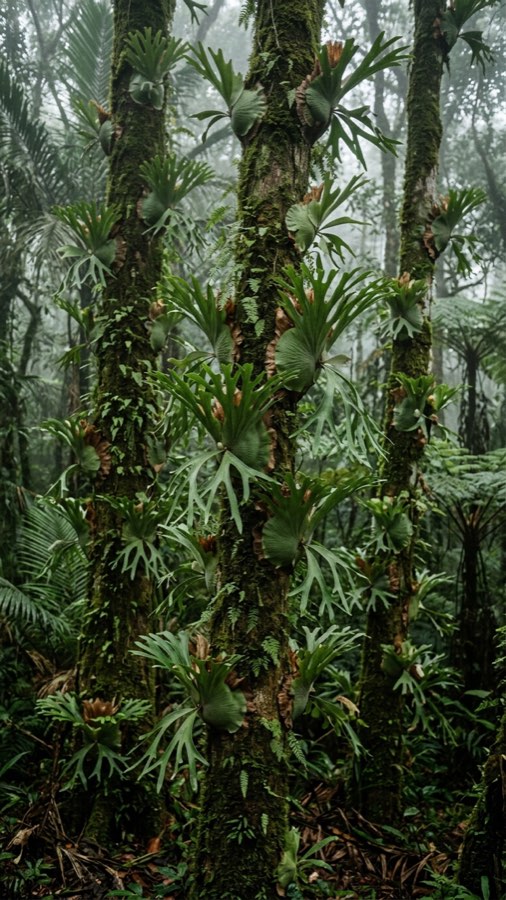 PLATE VI
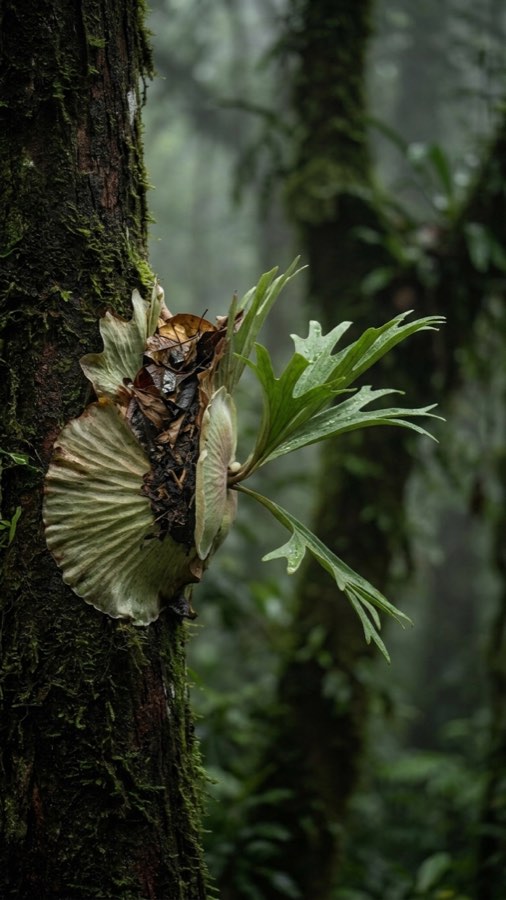 PLATE VIIPLATE VIII
このシダは、土のない幹の上でしか生きられません。
それでも枯れないのは、落ちてくるものを集めて自分の土をつくるからです。
株の根元では、円い盾のようなleafが幹に貼りつき、落ちleafとRainを受け止めます。
受けた落ちleafはゆっくり腐り、幹との隙間に自前の腐植ポケットが育ちます。
そして鹿の角のようなleafは、Waterと養分の多い側へ向かって伸びていきます。
だから角が指す先の根元に、いちばん厚い腐植が眠っています。
On the morning after the first hard rain at the end of the dry season, only a few plants had opened their pale flowers. By noon the corolla had collapsed, and the anthers were already touching the stigma. The flower is built mainly for self-pollination, yet I saw small flies moving over the wet sand and licking at the mouth of the flower before passing to a neighboring stem. Pollination here is not a spectacle, but a brief insurance policy enacted in the hours after rain.
Lean Sand-fast does not appear evenly across the forest floor. Sparse groups of a dozen or so stems follow shallow depressions, the shade of fallen trunks, and narrow lines where rainwater sheets over the white sand. Its fine seeds, released after fruiting, seem not light enough for long wind dispersal, but are pushed a few meters across the wetted surface by a thin film of water. The patches are not evidence of vigor; they are the trace of seeds caught by the microtopography of the sand.
Outside its flowering period, Lean Sand-fast is little more than a grey-green needle dusted with white sand, and a collector would easily have taken it for a young sedge or the broken stem of a seedling. The flowers appear only for a few weeks at the end of the dry season, and then chiefly on mornings after rain. To those walking the white-sand forest from the Essequibo river routes, it served as a marker along narrow paths; in a herbarium, it would have remained an unnamed fragment, long placed among misidentified material.