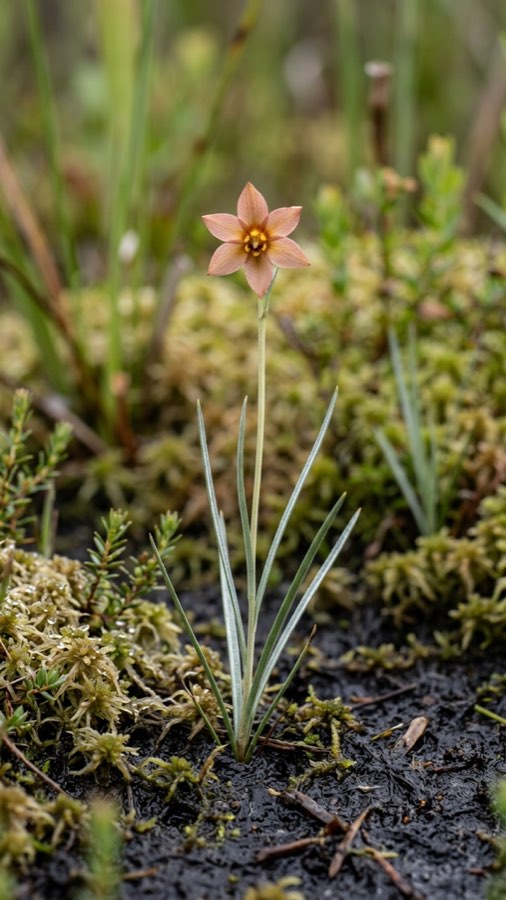
Specimen · N°041 · 岩
Selectiva obsidiana傷選びの星
最も焦げた芽だけが、翌年まで残ります。
FOUND 40.2°N 44.8°E · アルメニア、ゲガム山地の黒曜stone礫原 · ✝ EX · Last seen 1967
最も焦げた芽だけが、翌年まで残ります。
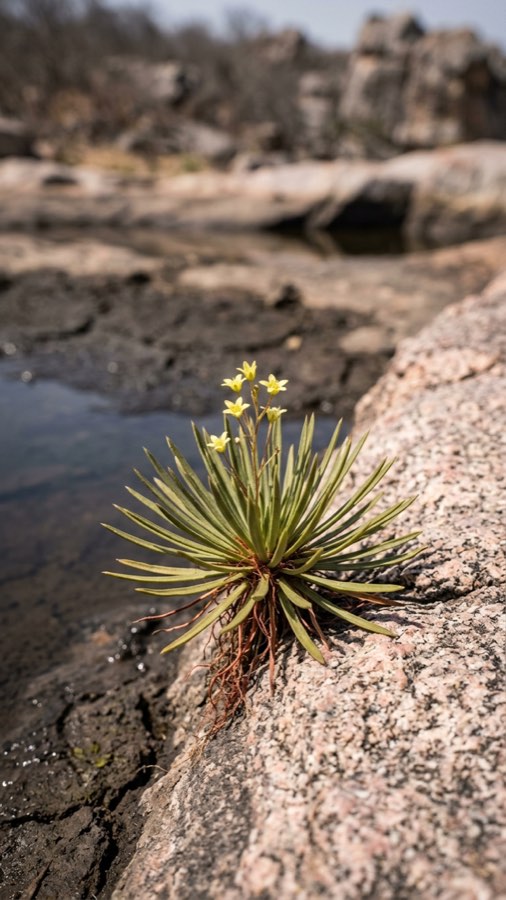
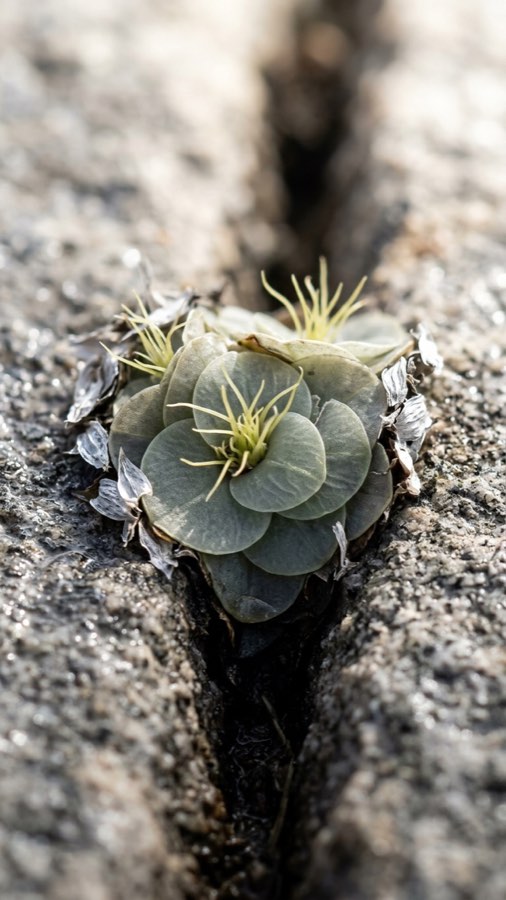
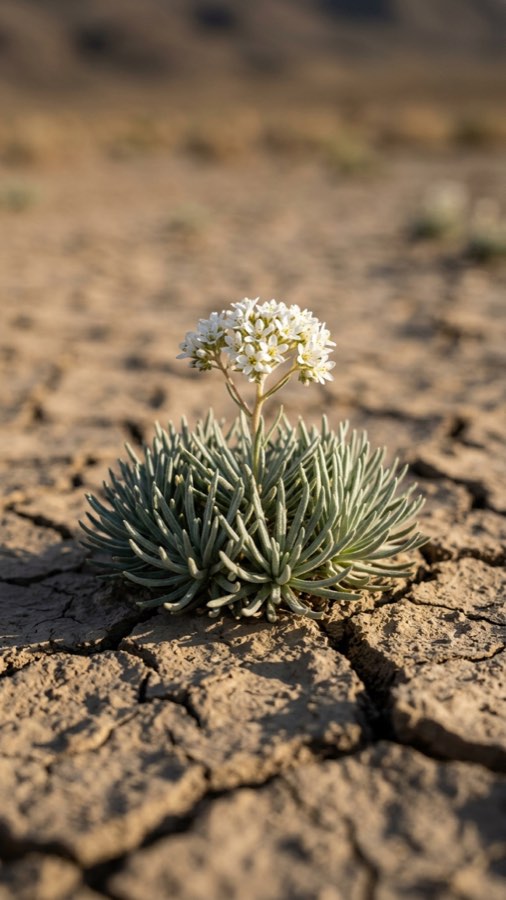
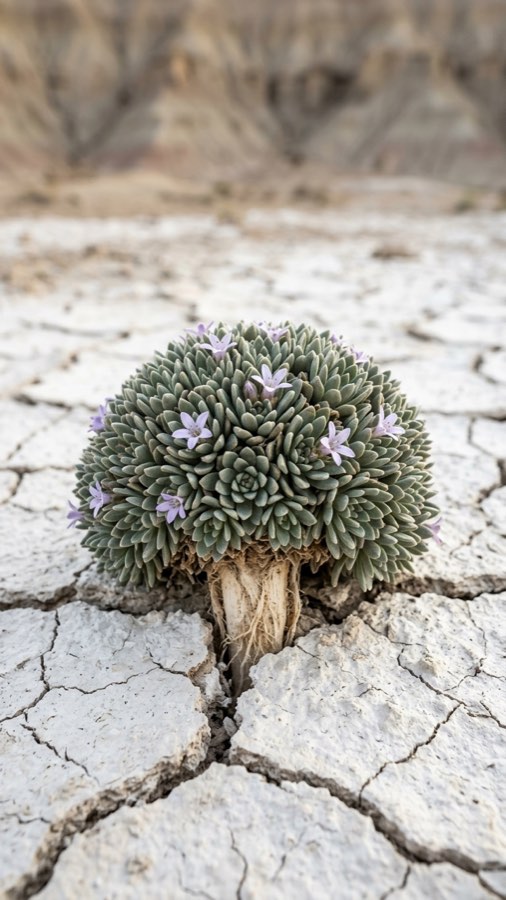
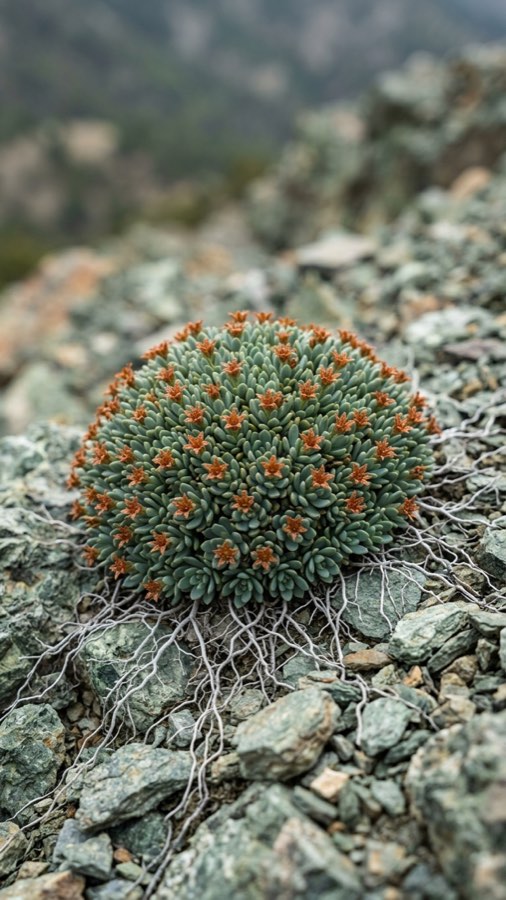
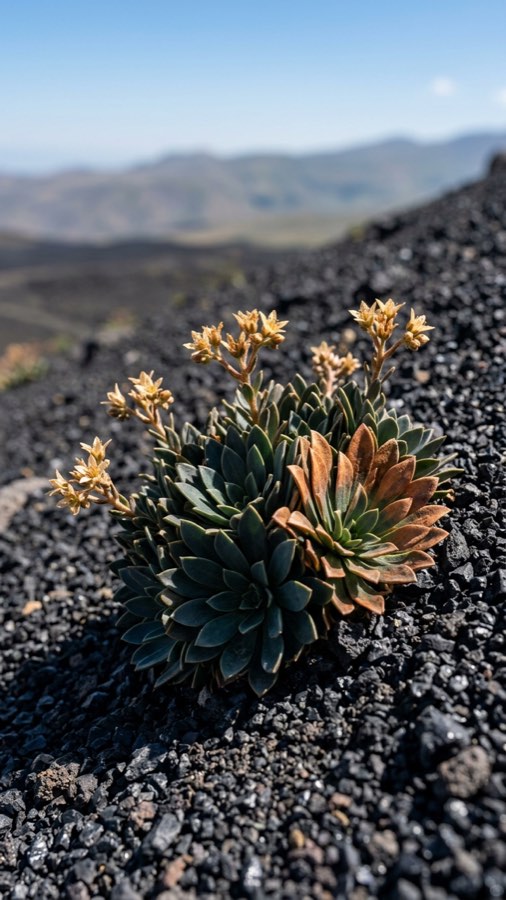
傷選びの星は、高さ10cmほどの低いクッション状のplant。黒みがかった青緑の革質のleafを密なロゼットに広げ、短く枝分かれした茎の先に、淡い琥珀色の小さな星形のflowerをつける。一株のうち、最も日が当たる側は紫外線で焼け、leafが銅色に変色して傷んでいく。多くのplantが損傷を避けるのに、このplantは逆に、最も傷ついた側の芽だけを翌年の主茎に選ぶ。傷の大きさは、その芽がどれだけ強くDNAを修復できたかの証になる。修復しきった芽だけが残り、礫原の上で年ごとに位置をずらしながら、淡い星形のflowerを咲かせ続ける。
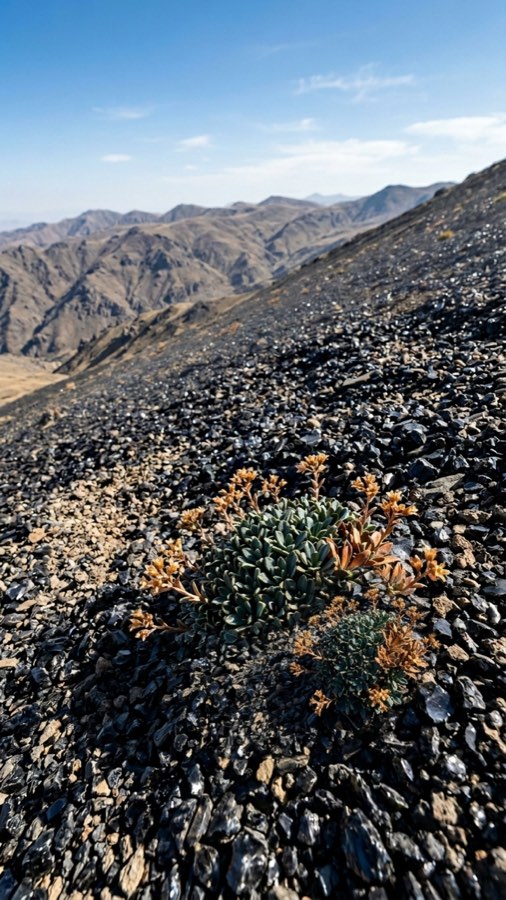 PLATE I
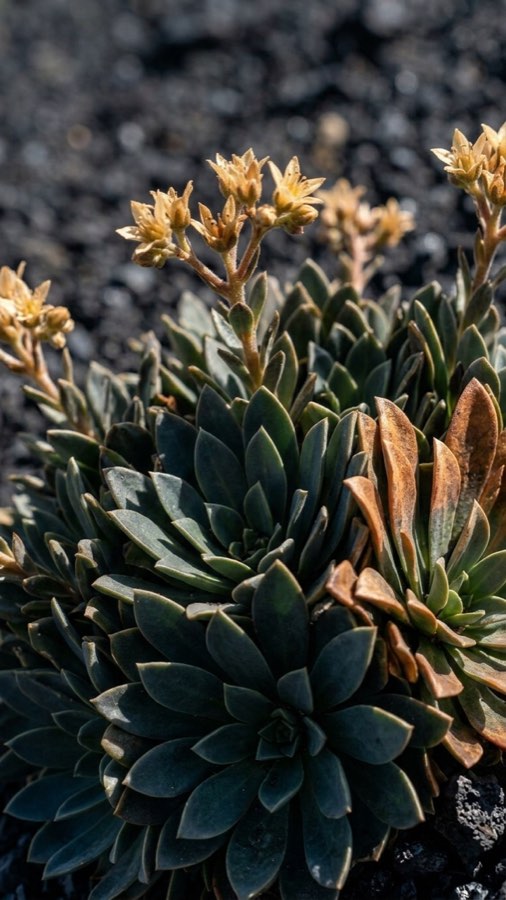 PLATE II
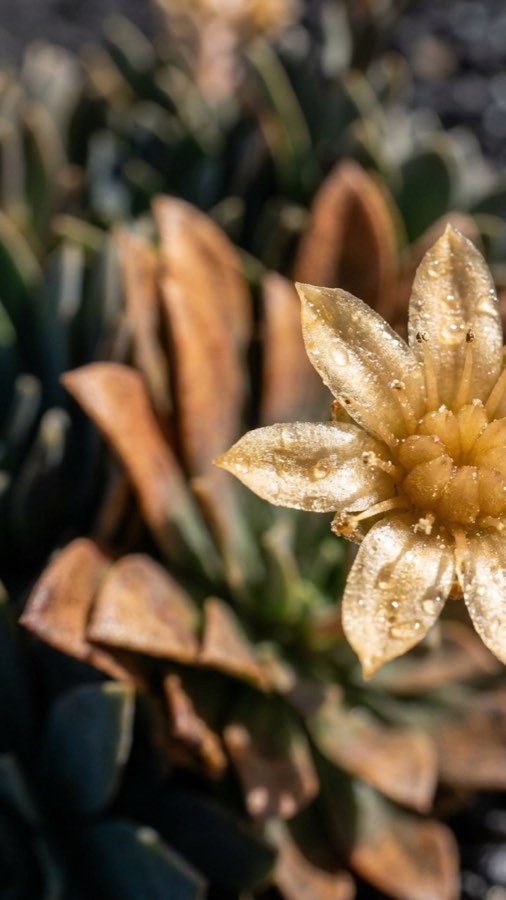 PLATE III
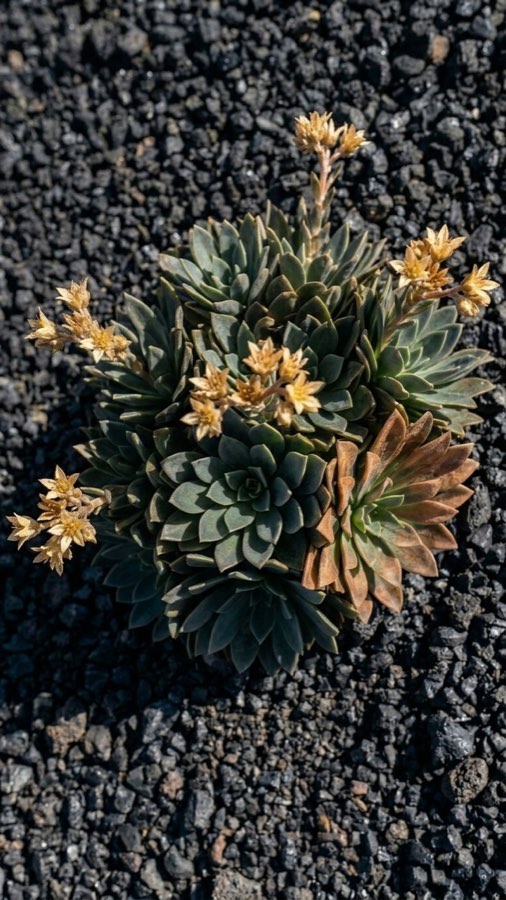 PLATE IV
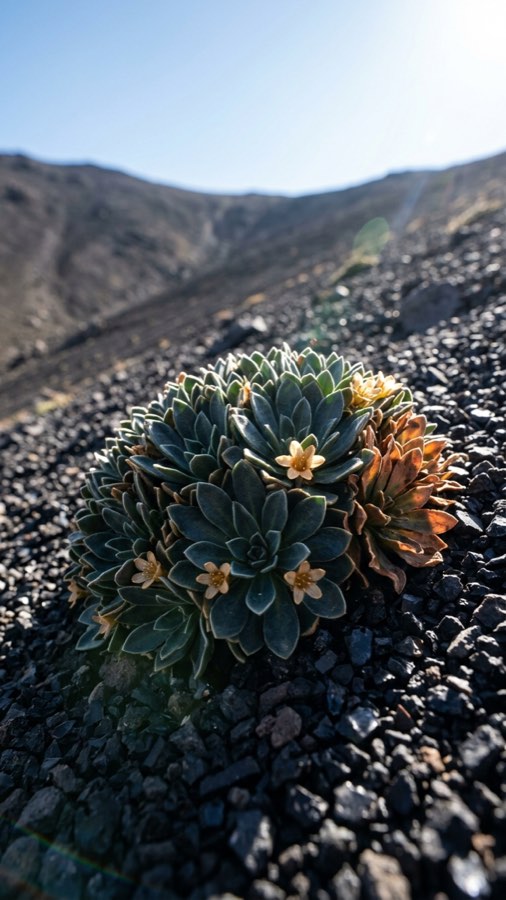 PLATE V
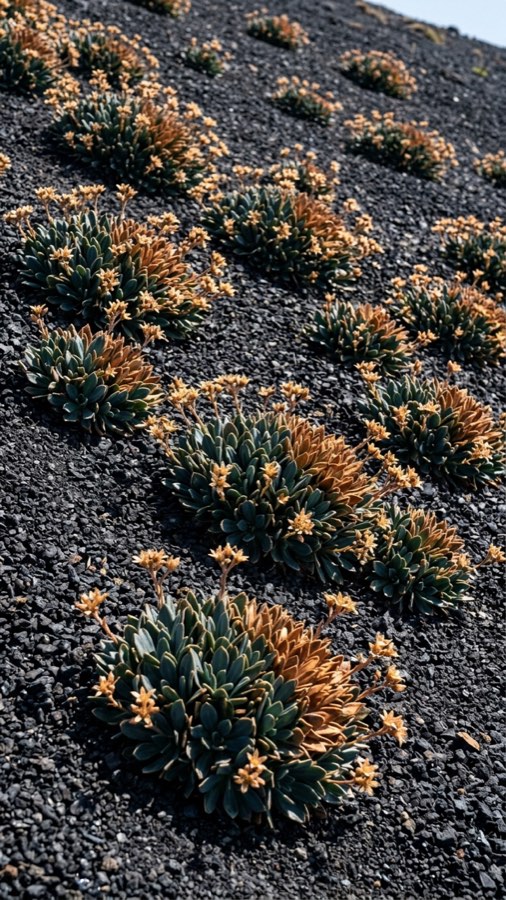 PLATE VI
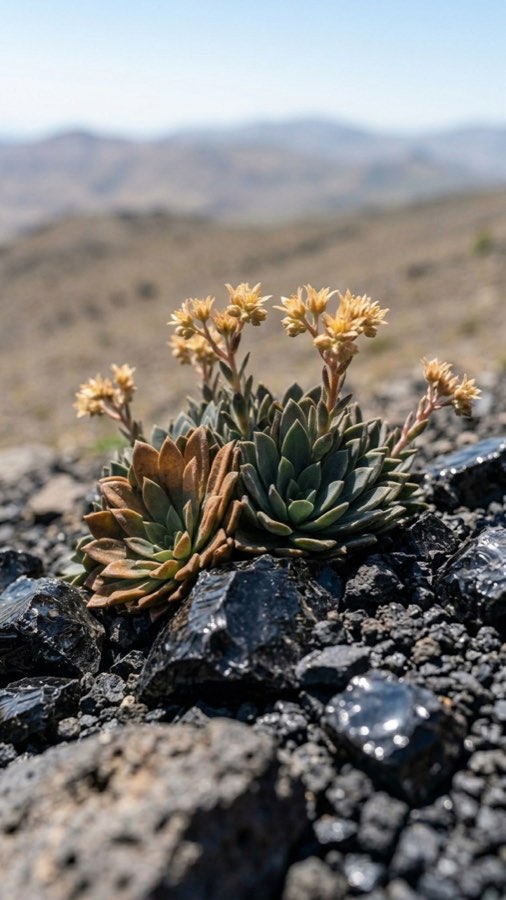 PLATE VIIPLATE VIII
最も焦げた芽だけが、翌年まで残ります。
傷を避けるのではなく、傷の大きさで選んでいるのです。
アルメニア、ゲガム山地の黒曜stone礫原。
黒いガラスの礫が日射を吸い、強い紫外線を照り返します。
傷選びの星は、礫のすき間にだけ根を下ろします。
最も日が当たる側は焼け、leafが銅色に傷んでいきます。
The flowers opened for only two or three days after the edge of snowmelt crossed the scree. By afternoon, reflected heat from the obsidian gravel had already wilted the petals. In dry-season specimens, only copper-burned rosettes remained, which likely explains why many records dismissed it as an aged alpine cushion plant.
Small alpine hoverflies visited the flowers briefly in the early morning, but their visits varied from plant to plant. Because the anthers stand close to the stigma, even wind-shaken corollas can drop pollen onto it; fruit set therefore appears to rely chiefly on self-compatibility. The seeds do not travel far, and only those falling between obsidian stones find spring moisture.
On obsidian screes away from the summer grazing tracks, few paths remain visible. Shepherds are said to have remembered that, among the black stones once linked with blades and fire-striking, only the scorched bud rose the following year. The name “scorched-bud star” seems to come less from the flower than from a local habit of reading burn marks in the ground.