Specimen · N°048 · 砂 · ▶ Film
Aphyllanthe essequibensis無leaf草
leafを減らすほど、まるで速く育つplantです。
FOUND 4.0°N 58.6°W · ガイアナ、エセキボ地方の白砂林 · ✝ EX · Last seen 1991
leafを減らすほど、まるで速く育つplantです。
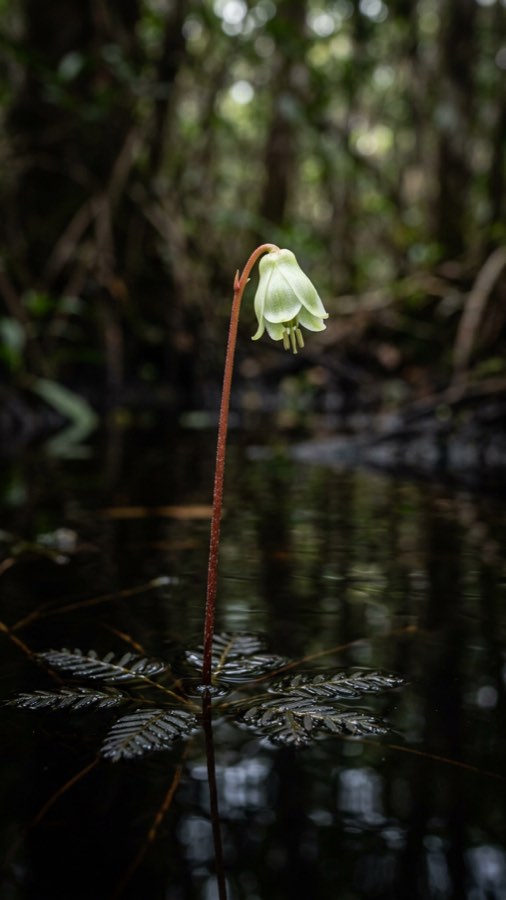
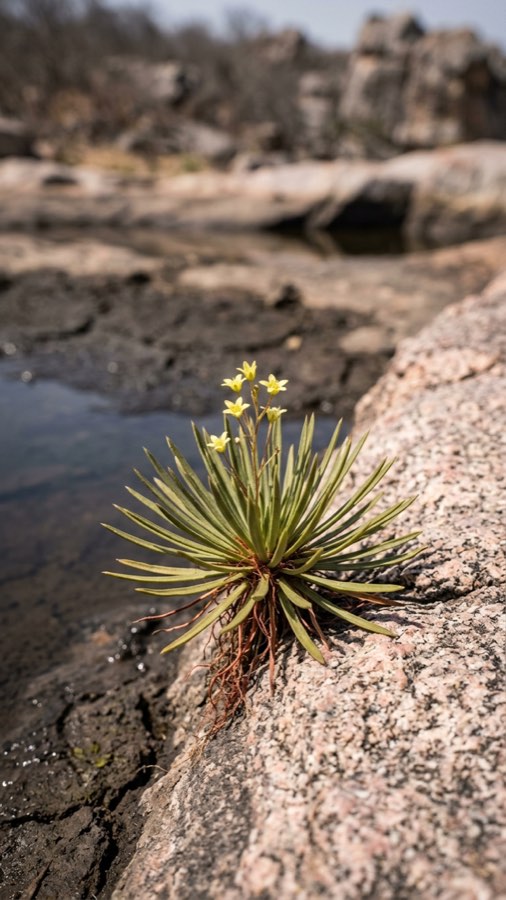
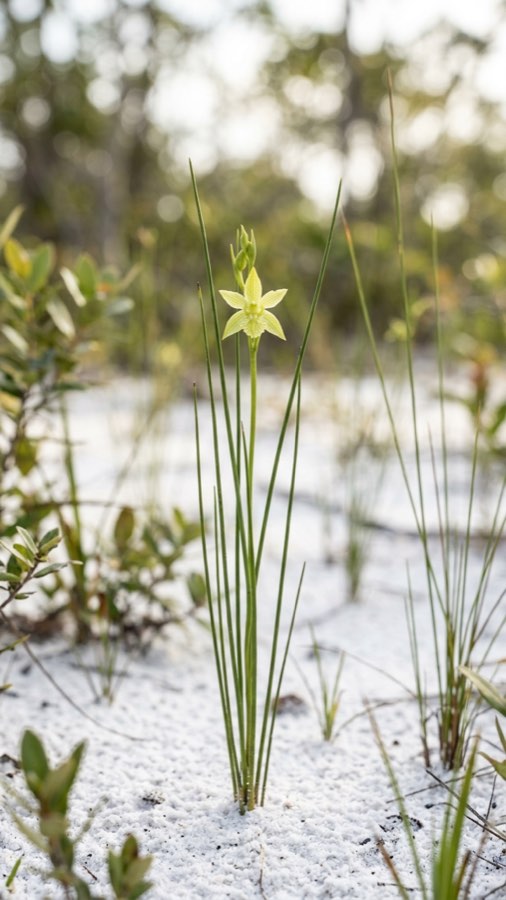
無leaf草は、高さ20cmほどの細いplant。緑色の細い茎が数本まっすぐ立ち上がり、leafはほとんど持たない。茎の先に淡い黄緑色の小さな星形のflowerをひとつつける。栄養の乏しい白砂では、leafを広げるほど維持に栄養を奪われ、かえって成長が遅くなる。そこで無leaf草はlight合成のはたらきを茎のごく一部の細胞へ密集させ、leafをほとんど捨てた姿で炭素を得る。隣り合う株ほど茎の本数が少なく、leafが少ない株ほど早く育つという逆転が、この白砂の上では起きている。
Film coming soon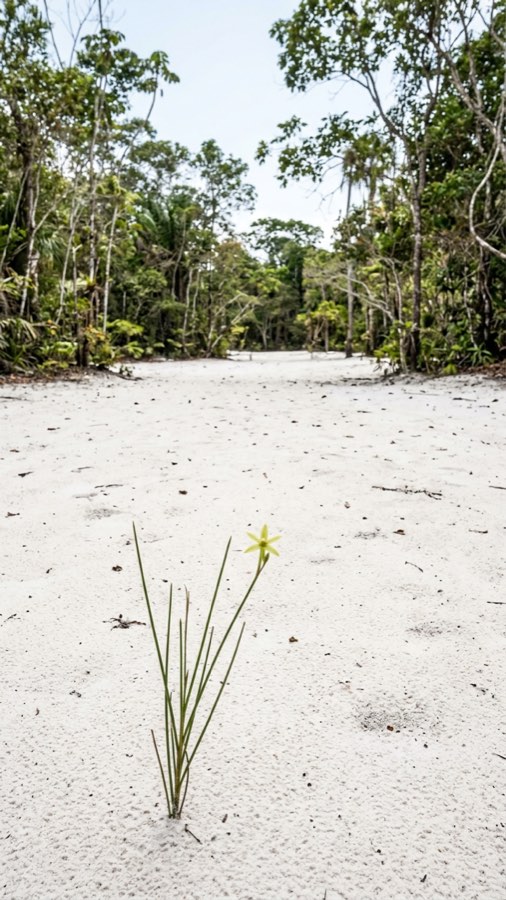 PLATE I
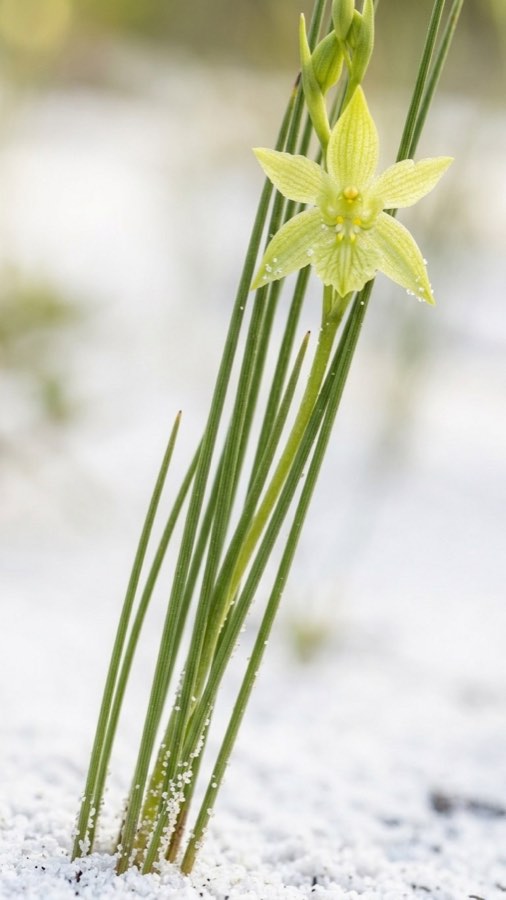 PLATE II
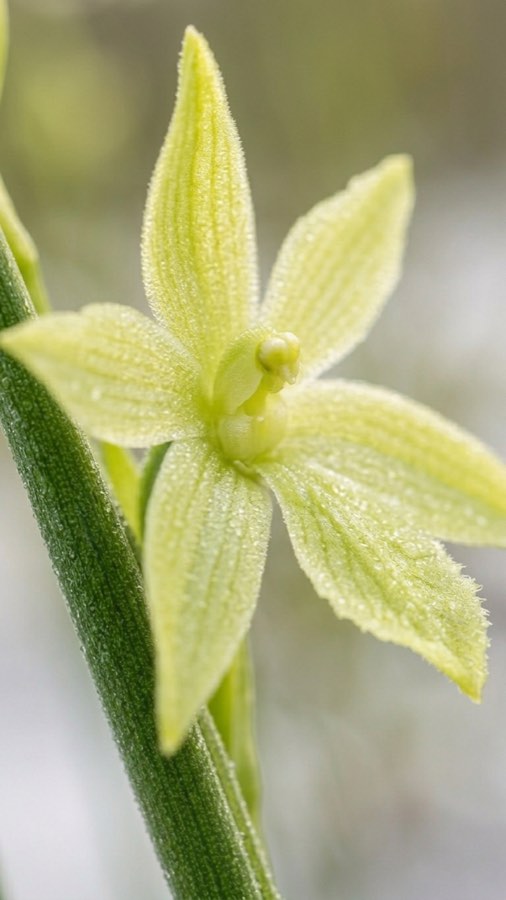 PLATE III
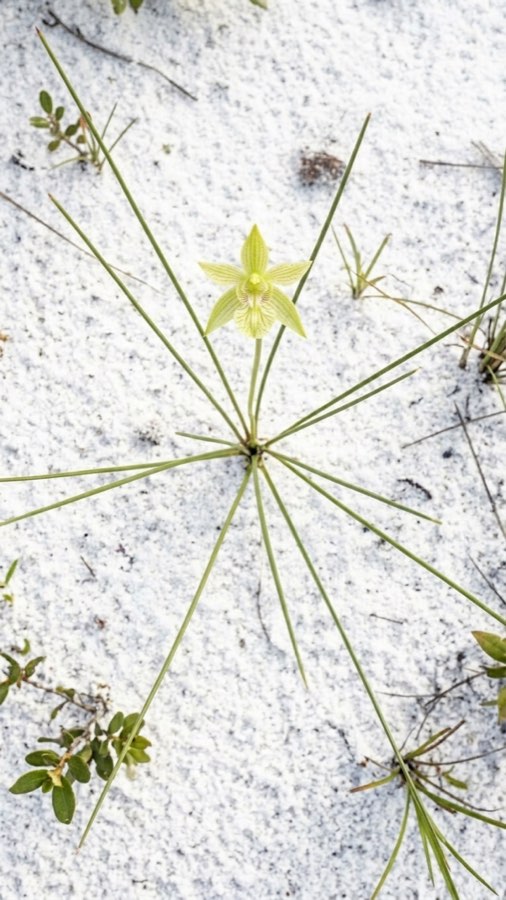 PLATE IV
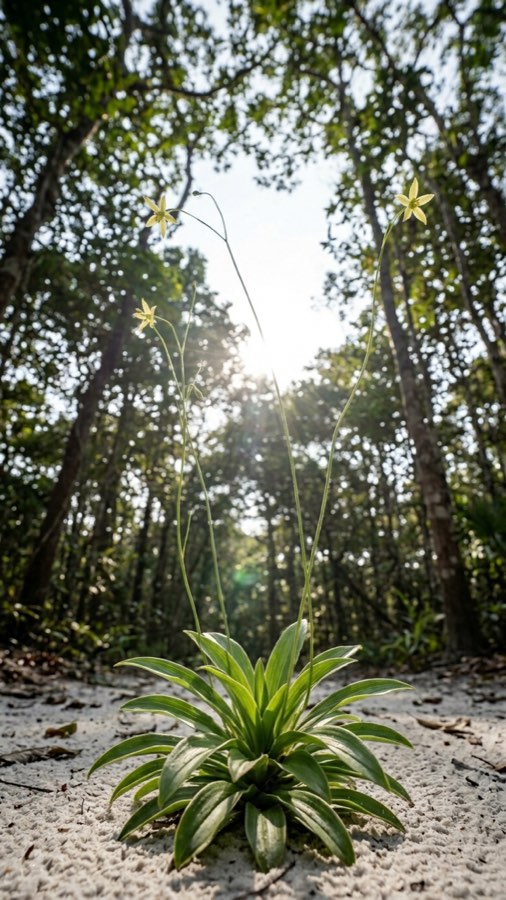 PLATE V
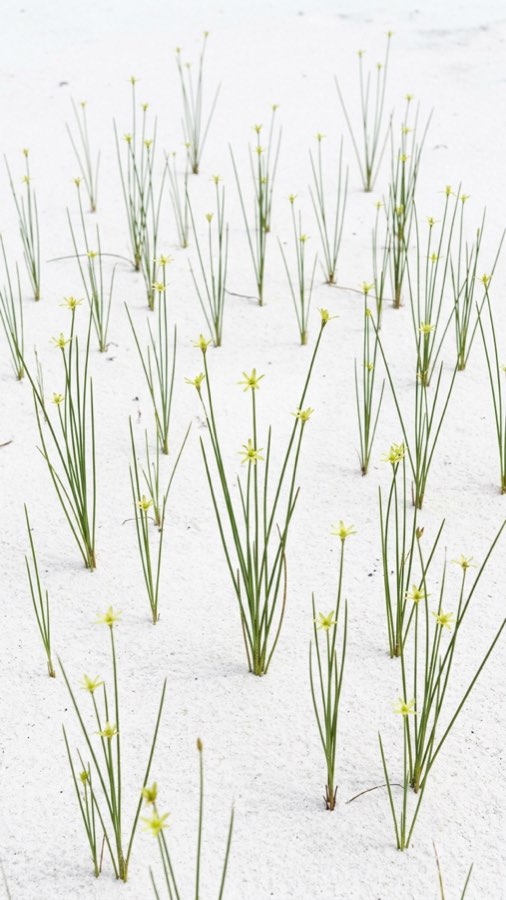 PLATE VI
 PLATE VIIPLATE VIII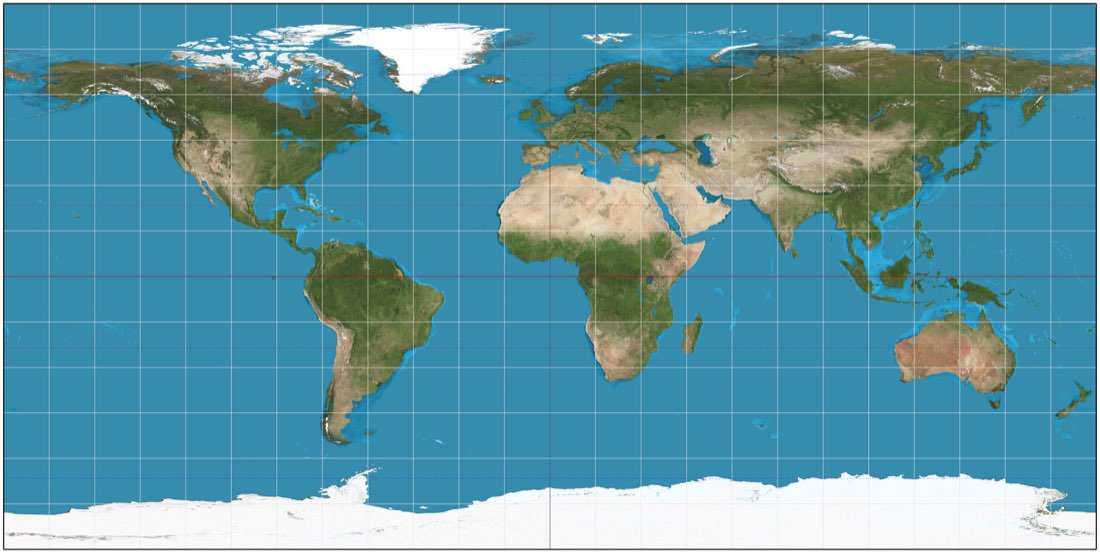
leafを減らすほど、まるで速く育つplantです。
ふつうは、逆のはずです。
ガイアナ、エセキボ地方の白砂林。
栄養がほとんど抜け落ちた、真っ白な砂の上。
無leaf草は、leafをほとんど持ちません。
light合成のはたらきを、細い茎のわずかな細胞へ密集させています。
Within about three days after the first hard rains, the stems rise on the shallow moisture held in the white sand, and the flower closes after only two or three nights. In the dry season only pale, hardened stems remain, difficult to separate from fragments on the sand surface. Any old specimen filed among dwarf sedges was likely collected in this spent condition, after the flower had already gone.
The pale yellow-green star-shaped flower is not a showy lure; it loosens its anthers only toward evening and gives off a faint scent. Minute nocturnal moths visit, but fruit also sets in poor visitation years, suggesting that self-pollination inside the wind-shaken flower is primary. The ripe fruit does not split. It is struck loose by rain and rolls only a few dozen centimeters, producing tight colonies in which neighboring plants become thinner and carry fewer stems.
Where Aphyllanthe grows, the litter layer is thin, and a probing root or digging stick finds little dark humus beneath it. The saying that even birds do not nest there is less a superstition than a rule of experience: such open ground offers few fruits and insects. White sand marked by these green pens would have been read as land where swidden crops fail quickly and fruit trees drop their leaves in the dry season.