Specimen · N°046 · 土 · ▶ Film
Radicofolia loessica露根草
どこが根で、どこがleafなのか、誰も見分けられません。
FOUND 37.0°N 110.0°E · 中国、黄土高原の侵食峡谷 · ✝ EX · Last seen 1971
どこが根で、どこがleafなのか、誰も見分けられません。
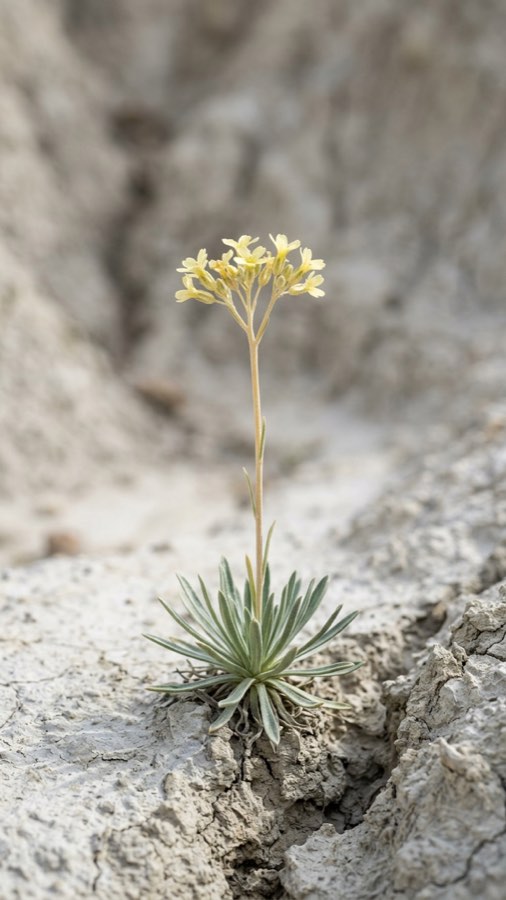
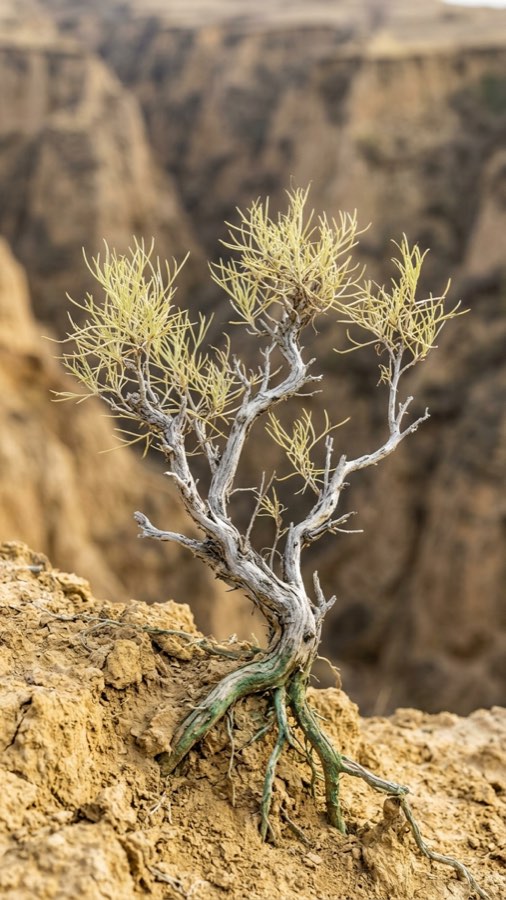
露根草は、高さ20cmほどの斜面plant。淡い黄緑色のごく細いleafを低くまばらにつけ、ash白色の節くれだった茎を地面すれすれに這わせる。最大の特徴は根にある。黄土が崩れて地中の根が空気にさらされると、その露出した根の表面だけが緑色に変わり、leafと同じ役割を引き受けてlightを集めはじめる。やがて崩れた土がRainで埋め戻されると、緑になった根は再び白い根へと静かに戻っていく。leafと根の境目がこのplantには固定されておらず、地形が変わるたびに器官の役割が入れ替わる。どこがleafでどこが根なのか、見るたびに違って見える。
Film coming soon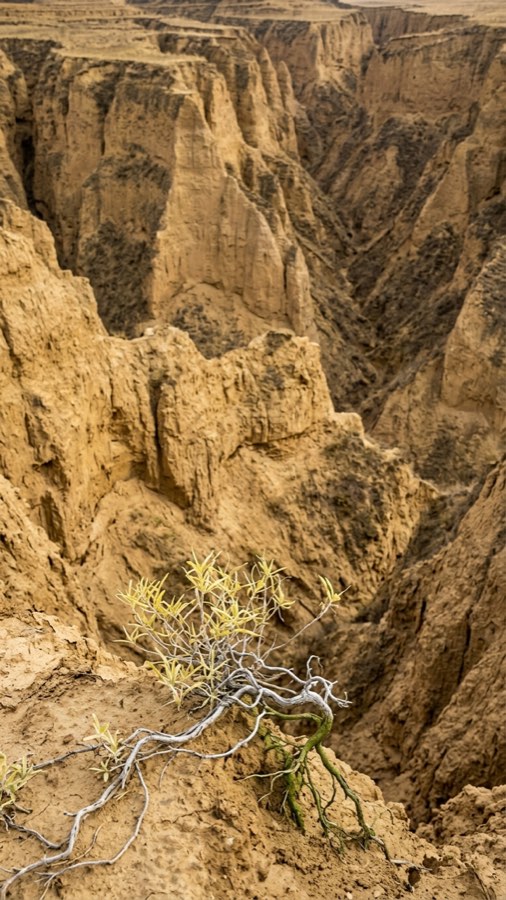 PLATE I
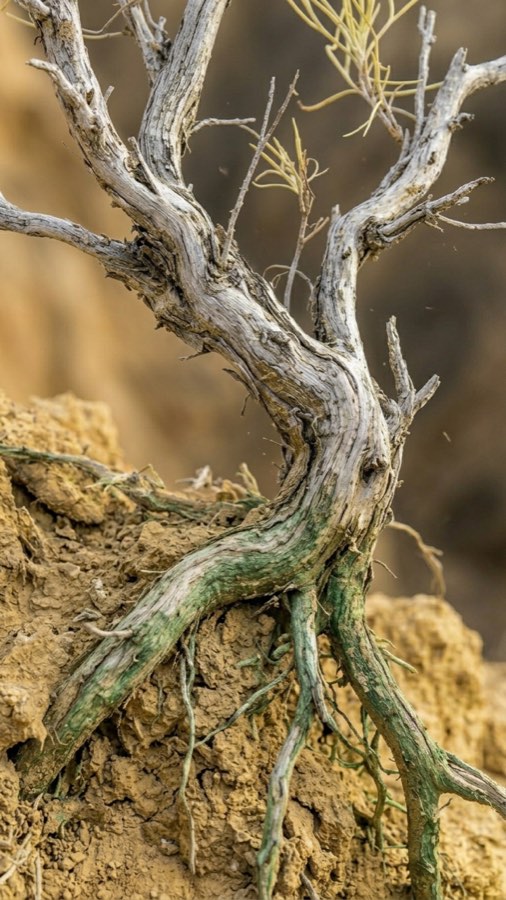 PLATE II
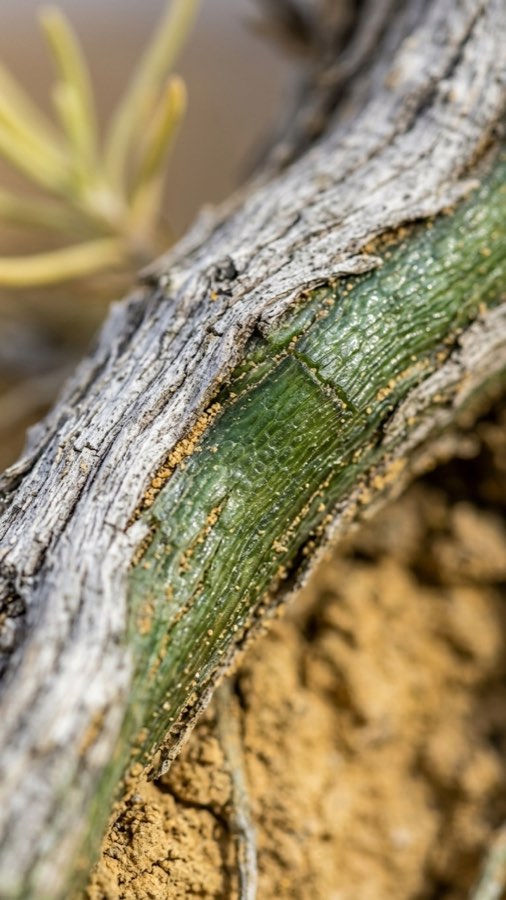 PLATE III
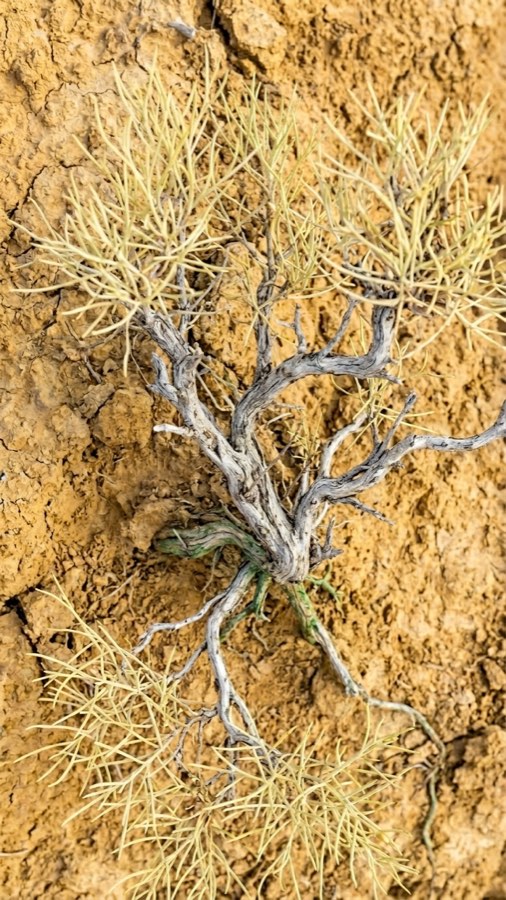 PLATE IV
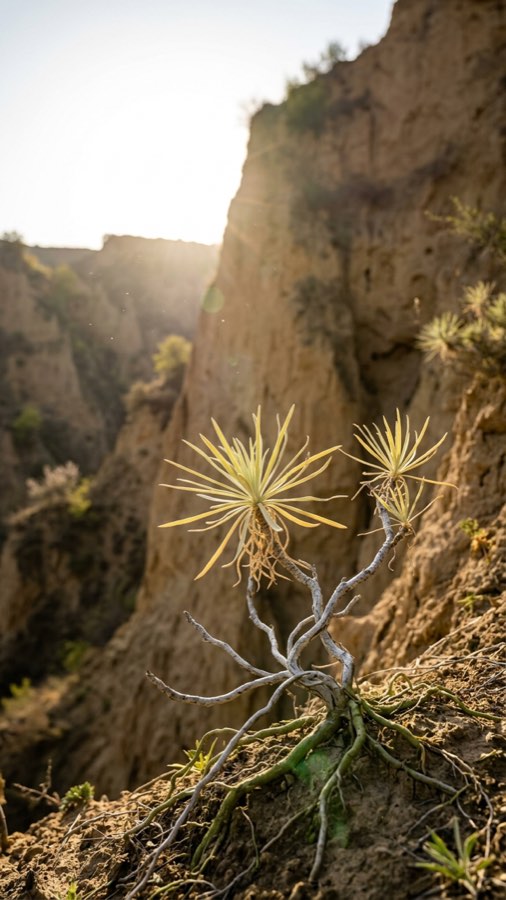 PLATE V
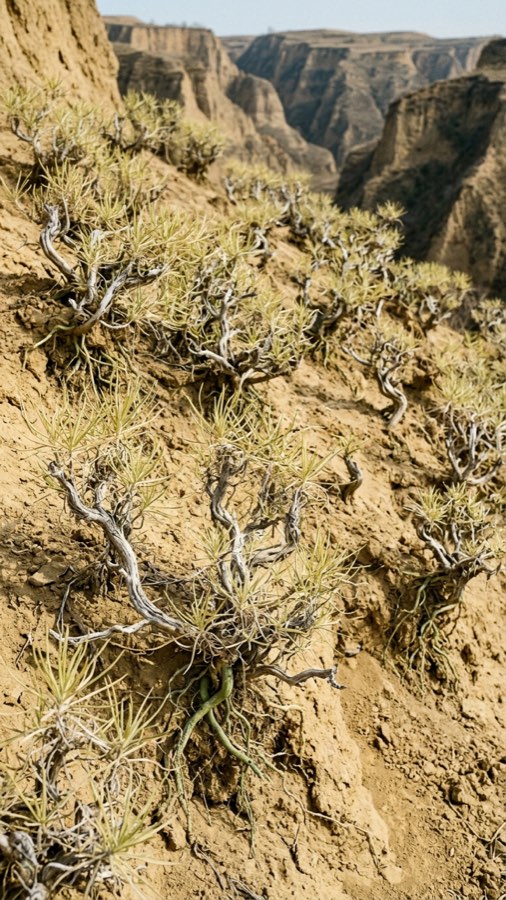 PLATE VI
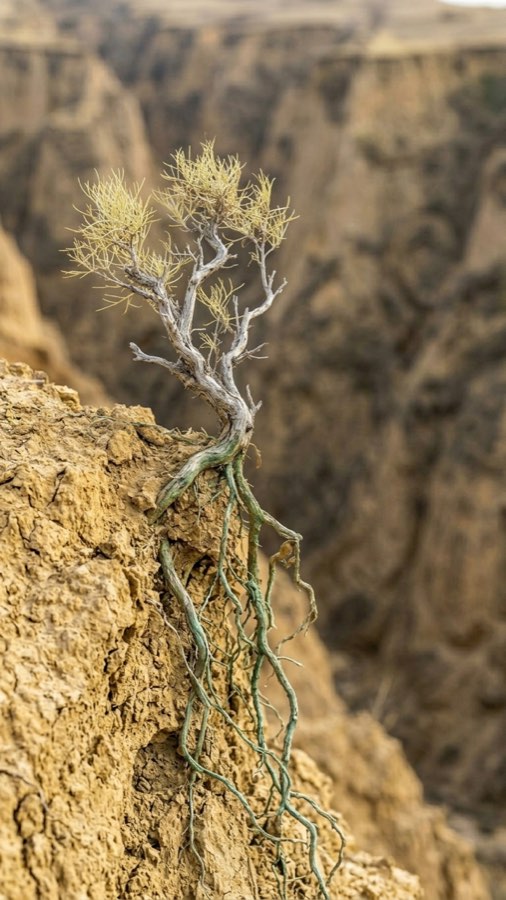 PLATE VIIPLATE VIII
どこが根で、どこがleafなのか、誰も見分けられません。
崖が崩れ、土の中の根が空気にさらされると、
その根の表面だけが、ゆっくりと緑に変わります。
中国、黄土高原の侵食峡谷。
むき出しになった黄褐色の急斜面にだけ、露根草は現れます。
緑になった根は、leafと同じようにlightを集めはじめます。
Two or three days after a collapse, I observed pale brown spikes, shorter than the leaves, rising from the nodes of the gray-white creeping stems. The perianth scarcely opens; only during dry afternoons do the anthers split, giving powdery pollen to the valley wind moving over the loess. This is not a form that waits for visiting insects. Radicofolia loessica appears to complete its flowering quietly during the few days when bare ground leaves it exposed to wind.
The fruit is inconspicuous. When dry, it breaks apart beside the nodes and releases minute seeds almost indistinguishable from grains of loess. Their rounded seed coats are finely pitted, allowing them to adhere to damp cliff faces and then sink into a film of mud with the next rain. Germination does not proceed while they remain buried; only grains brought back to light and air by a fresh collapse begin to move. Their persistence on the slope seems to depend not on lightness, but on behaving like the soil itself.
The green of the exposed root does not last. When struck by light, cortical cells rapidly organize chloroplasts, but the surface carries a thin corky layer and a waxy film that closes during drying, allowing the plant to use only the brief moisture after rain. Once collected and pressed, the root turns white again within days. It then resembles either a poor-leaved creeping herb or an old root caught in a crumbling bank. What escaped the record was precisely the character that defined it.